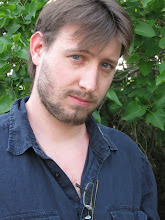
This post will serve as a meeting place for online friends of John Reilly, especially those who have frequented his website, The Long View. Please post any news and information, prayers for John and his family, and discuss your plans for continuing his work in the wake of recent serious health concerns.
This blog is certainly not a substitute for The Long View, and I am not much of a webmaster, but we can meet here for as long as we have to.
Your posts are most welcome.
Saturday, May 26, 2012


Wednesday, January 4, 2012
Peak Oil Comment
Peak Oil is a real, immanent, and very serious problem. It is nothing like Global Warming at all. Here's why.
While there may have been a point in time when the Global Warming hypothesis merited some attention (back when the issue was first mooted, perhaps), subsequent years of sober and rational reflection have shown us that those concerns can be safely dismissed. Mankind simply cannot produce enough carbon dioxide to affect the climate. The scale is too vast, the feedbacks are too complicated, and the other forcing and/or buffering mechanisms we have identified completely swamp whatever paltry effect our miniscule contribution to global greenhouse gas levels may be causing (if there even is such an effect, which we cannot definitively conclude).
On the other hand, the lexicon of alarmist terms with which we have become familiar through the Global Warming debate -- terms like 'tipping point' and 'runaway feedback' -- really do apply in the case of Peak Oil. Just one Iranian nuclear weapon, whether or not it is even detonated, could set off a chain of events which will disturb the world's oil-producing region for the foreseeable future.
There is a human dimension to this problem which most commentators seem oblivious to. Oil in the ground does nobody any good. If it cannot be extracted, bought, sold, transported, and refined into useful products, it might as well not exist. It is human societies which produce and consume oil, and our ability to exploit a resource is conditioned by numerous factors besides the level of stated reserves. You cannot simply assume that we will have the resources and finance capital to utilize unconventional oil sources. You cannot simply assume that "technology" is a silver bullet which will overcome all production hurdles. And only someone blissfully ignorant of all world history could believe that governments will ever "get out of the way" and allow private oil producers to pump the wells dry in a Libertarian fantasy-land. The world is the theater of bloody politics: it always has been and it always will be. People will fight for power, wealth, and security, and many delicate fruits of our exigent civil society -- fruits like easy access to finance capital and loads of money for R&D -- will get trampled in the process. The system of intellectual and financial tensions stretched across the global economy is now so tight that any minor supply disruption could cause the threads to begin to snap. And with the world's advanced economies getting older and deeper in debt, they will not be able to consume oil as efficiently as before. This is just the beginning of a process that will result in a slowdown of the global economy and the outbreak of hostilities. We will have to get used to living in a world where war is more frequent and wealth less taken for granted; a world, in short, of less civilization.
Ultimately, it is man's ability to produce and consume energy efficiently which has peaked. This is the critical measure, the only one that counts in the last analysis. It has a complicated relationship with resource reserve levels, but is not linearly dependent on them. It is more dependent on culture, on the societal discipline which develops the talent necessary to rule the world with the force and intelligence that such requires. The West began depleting that resource quite some time ago.
While there may have been a point in time when the Global Warming hypothesis merited some attention (back when the issue was first mooted, perhaps), subsequent years of sober and rational reflection have shown us that those concerns can be safely dismissed. Mankind simply cannot produce enough carbon dioxide to affect the climate. The scale is too vast, the feedbacks are too complicated, and the other forcing and/or buffering mechanisms we have identified completely swamp whatever paltry effect our miniscule contribution to global greenhouse gas levels may be causing (if there even is such an effect, which we cannot definitively conclude).
On the other hand, the lexicon of alarmist terms with which we have become familiar through the Global Warming debate -- terms like 'tipping point' and 'runaway feedback' -- really do apply in the case of Peak Oil. Just one Iranian nuclear weapon, whether or not it is even detonated, could set off a chain of events which will disturb the world's oil-producing region for the foreseeable future.
There is a human dimension to this problem which most commentators seem oblivious to. Oil in the ground does nobody any good. If it cannot be extracted, bought, sold, transported, and refined into useful products, it might as well not exist. It is human societies which produce and consume oil, and our ability to exploit a resource is conditioned by numerous factors besides the level of stated reserves. You cannot simply assume that we will have the resources and finance capital to utilize unconventional oil sources. You cannot simply assume that "technology" is a silver bullet which will overcome all production hurdles. And only someone blissfully ignorant of all world history could believe that governments will ever "get out of the way" and allow private oil producers to pump the wells dry in a Libertarian fantasy-land. The world is the theater of bloody politics: it always has been and it always will be. People will fight for power, wealth, and security, and many delicate fruits of our exigent civil society -- fruits like easy access to finance capital and loads of money for R&D -- will get trampled in the process. The system of intellectual and financial tensions stretched across the global economy is now so tight that any minor supply disruption could cause the threads to begin to snap. And with the world's advanced economies getting older and deeper in debt, they will not be able to consume oil as efficiently as before. This is just the beginning of a process that will result in a slowdown of the global economy and the outbreak of hostilities. We will have to get used to living in a world where war is more frequent and wealth less taken for granted; a world, in short, of less civilization.
Ultimately, it is man's ability to produce and consume energy efficiently which has peaked. This is the critical measure, the only one that counts in the last analysis. It has a complicated relationship with resource reserve levels, but is not linearly dependent on them. It is more dependent on culture, on the societal discipline which develops the talent necessary to rule the world with the force and intelligence that such requires. The West began depleting that resource quite some time ago.
Tuesday, July 19, 2011


Sunday, May 22, 2011
Masculine Compassion
Speaking as a man (that is to say, not generically as a member of the human race, but specifically as a male), there are certain things I just know—call it masculine intuition, if you will. And from that ineffable font of knowledge there comes also a fine sense for the characteristically masculine type of compassion; a type which is not widely discussed today, for it has largely been buried beneath two centuries of modern socialist-egalitarian rhetoric. That is not to say that there are none who now practice it; but they do so, in a manner of speaking, out of sight, in the hidden courses of life where the warmth of recognition seldom penetrates. It is not much admired openly, still less is it called forth and given its right and its due; for it moves against the basic presuppositions of our era, and consequently it is proscribed, ridiculed, and even eviscerated by the whole tone and timbre of our public existence.
Yet it does not die. It is, however, shifted into the realms of fiction and history, where alone it still seems permissible to venerate it. For there, in fiction and in history—in the timeless sighing of the human spirit, in the worthy accomplishments won by that spirit in the past—there only do we yet find those essential prerequisites which are necessary for comprehending the operations of masculine compassion. We may mention here, as examples of the same (but certainly not an exhaustive list thereof), such things as an acknowledged hierarchy of men and values; a settled and universally accepted understanding of what constitutes virtue, goodness, and the correct ordering of society; the presumption of permanence that attaches to marriage and property; and the duty of men (males), each in his own domain, to rule—to set forth laws and administer punishments—as the good of the place requires. This pattern is instinctive to us and therefore desired by us; however, in accordance with the now ascendant canons of modernism, it cannot be reflected in our ordinary manner of speaking. Thus it will behoove us, unfortunate men of the modern world, to throw off such mannerisms; and, eschewing all pretensions to sophistication, to speak a plain word, heart-spoken and real, in defense of our love and compassion, defining them in contrast to the phony versions thereof with which we’ve been saddled today; and in so doing, free our consciences from the guilt of acting falsely, to the great benefit of ourselves, and to that of the whole world around us.
The plain word, of course, is fatherhood. Masculine love is always an expression of fatherly care, either literally or metaphorically. But no man can act as a father to one who is greater than he; which is why, in all types of society, there must be a social hierarchy with a man at the head of it. In the absence of either one of these conditions, the possibility of fatherhood is implicitly denied. Therefore hierarchy there must needs be if we are to have fathers and be fathers; but we should not confuse this with some merely bestial struggle for primacy within the social group, or with a desire to put down our inferiors and lord our power over them. It is quite the opposite, in fact. The point is worth some attention.
Whenever a good man comes to realize that the person he’s dealing with is truly his spiritual and intellectual inferior, he is borne out of himself on a wave of fatherly compassion which lays claim to the other person and seeks his safety and his good. The bad man, of course, does not feel this way—he tries to exploit the weaknesses of the other. But since this essay is not meant to be a comprehensive treatise on virtues and vices, I will leave off talking about the bad man just yet. For the good man, on the other hand, the feeling is both familiar and, in the ordinary run of things, automatic. It is almost identical with the noblest aspirations he entertains, i.e. the chance to be somebody’s benefactor and hero. I would go so far as to say that a man’s kindly disposition towards his ward is the masculine analogue of the natural affinity women have for infants and children. So strong is this feeling, at times, that it seems not to matter if the inferior man has actually done you an injury in his ignorance and carelessness. You want to redress the wrong, certainly; but you try to do so in such a way that the punishment is not too harsh, that the lesser man may be raised up and tempered by the experience. In such fashion do good men love their children. So even do they care for their wives, domestic servants, and the whole of their extended family. So also do they adopt others, become mentors, take on students and apprentices. To their commercial and public lives they apply something of the same basic attitude. In short, to as much of the world as comes under their care in some capacity, for so much do they feel responsible, and would seek to bower so much under the protective mantle of their foresight, their thoughtfulness, and their courage. And finally, this high-minded gentility is the quality they look for when choosing friends. It is what they expect their friends to display, and what they expect their friends to expect them to display, so that they all may sharpen and perfect one another in goodness and humanity.
Universal among mankind (except in the modern world, that is) is the belief that commanding, courageous fatherhood is a virtue to be cultivated and respected. Universal, too, is the solemnification of the principal rites and practices which lead to fatherhood, or in which fatherhood is notably conferred or exercised. The revelation of the true religion of Christ has done nothing to negate this common conception of mankind; on the contrary it has strengthened it immeasurably. Therefore we can say that, in its plenary aspects, fatherhood is both a natural and a supernatural virtue. It is natural inasmuch as even the pagans practice it, for it appeals to man’s sense of natural goodness, justice, and permanence. It is supernatural inasmuch as God has established himself as Father over all; that He has given His divine blessing to both marriage and worldly authority; and that Christ His son has infused His own dignity into all our acts of care, sealing it with His solemn promise that, for good or for ill, He will count what we do to the least of His brethren as something done unto Himself.
(Now, in the interests of synthesizing and simplifying all that has been said thus far, and before proceeding to other matters, please permit me to offer the following summary. We have said that masculine compassion is something instituted by God as well as something good in itself. We have given this type of compassion a name: We have called it fatherhood, by which we mean to express both fatherhood properly so called, and also the characteristic manner in which men care about anything or anybody inferior to themselves. That the object of fatherly care is inferior to the father who cares for it, is intrinsic to the nature of fatherhood and inseparable therefrom. Absent this condition, fatherhood cannot be said to exist.)
Of all the components and characteristics of fatherhood, it is the unapologetic existence of a hierarchy of individual men and the differing values that they represent, which most directly opposes the sentiments of the modern world. For mention the words ‘lord’ or ‘master’ to anyone of the modern mindset, and you will elicit only negative reactions from him. He hears in such words nothing but the footsteps of tyranny, which he has never actually experienced himself, but which he regards as an ancient menace which his delightful modern society has rightfully put off. Now tyranny and oppression are abuses of the fatherly concept, to be sure; but democracy, egalitarianism, relativism—these deny the very nature of fatherhood. In a world where true lordship can scarcely even establish itself, it is something of a red herring to maintain an exaggerated fear of its prior distortions once again becoming prevalent. But since it is the latter, “popular” qualities for which modernity has set its cap, and since these qualities would not long endure the presence of genuine lords and masters, it is necessary for modernity to somehow prevent lords and masters from showing up its pretensions, which it does by (among other methods) calumniating them as “tyrants and oppressors” when they attempt to exercise their prerogatives. So prevalent is the capacity of modern man to equate authority with oppression, that proper respect for properly constituted authority—and knowledge of the nature and limits thereof—have all but disappeared from the scene. It may be helpful, then, to sketch a picture of masculine authority in action, which we can later contrast with the counterfeit version in vogue today.
So imagine, if you will, a small human community living a relatively uncomplicated life in a rustic setting. We say ‘rustic’ not because we are trying to set up some speculative primitivism as the standard by which to judge modern societies, but simply because, for the purposes of this example, we wish to avoid the logistical complexities introduced by contemporary urban living arrangements. You may allow your community to have machines, internal combustion engines, even electricity if you wish. The important thing is that they cannot count on receiving much outside assistance, nor can they take their standard of living for granted. They depend on their own efforts and on the land around them to supply them with their daily requirements.
Let no one in your community be known to you. In fact, remove them as far as possible from all familiarity. Set them in the distant past, the remote future, or perhaps even on another world. You may wish to endow them with a coat of fur or some other exotic feature, the more so to distance their mere humanity from your own. It goes without saying that you cannot speak their language. Finally, imagine yourself as an invisible man, a secret anthropologist projected into their midst, able to observe them but capable in no wise of interfering with them or even making your presence known. It is true that much of their culture and conversation will be lost upon you, for you will never participate in their mysteries or catch the nuances of their speech; but precisely due to this lack of involvement on your part, the pure and essential facts concerning your subjects—their basic characters and the power relationships that exist between them—will stand forth, bold and denuded of all the attachments and ironies that so complicate such analyses in our own world; and you will see their hearts, perceiving therein the substance, logic, and effects of all their actions, as solid and algebraic as brick-masonry.
Now whom would you call the ‘good men’ in your community?—not merely the ‘successful’ men, as if we were describing the dominant animals in the herd, but the truly good men? They are none other but the ones who bring order to the sprawling life around them. They are the ones who patiently instruct their children in all the important matters of life and conduct, not permitting them to deviate into base habits. They are the ones who order the work of the community, accurately foreseeing distant exigencies, appointing to each member some useful task that lies within the range of his skill, managing all with a wisdom that takes account of the complex interrelations between means and ends. The chiefest among them take thought for the welfare of the entire community and provide for its defense: some representing its interests in the world abroad; some judging cases and mediating disputes at home; while others of a different kind offer fitting sacrifices to the God in the temple, blessing the people and making atonement for their sins, exhorting them to remember those eternal things upon which their continued existence depends, and teaching them to live justly in the sight of the Lord. In other words, they all act like fathers, these good men, taking responsibility to see to it that what needs to be done, is done. They are empowered, each according to his level and his office, with a dignity of command, a sort of prescient beneficence such that disobedience to them seems both a crime and a folly, while obedience to them is revealed as righteousness.
But this power to command is not gotten for nothing; for the leader-man is not permitted to keep his ease or to amuse himself, or to follow his fancies wherever they may lead. He must develop a sort of immunity to ordinary pleasures and pains, must direct his mind toward the things which are higher than himself, and become grave. He must go forth from his comfort to wrestle with the Nothing, the Chaos; for his task is to make sure that his domain adheres to a form of justice which exists nowhere as a material fact but as spirit and contemplation only; a form, moreover, whose inexorable demands endlessly summon him to remake the life around him according to its fashion, while that very life in its wantonness is forever slumping and slipping away from it. So the leader must deny himself and take up his cross. He must knit himself together with cords of iron, shunning any affection, society, fame, or pleasure that threatens to interfere with his purpose. He must become competent at discerning spiritual things; and the things he comes to understand are things he must give away, dispensing incarnate wisdom in the form of edicts, corrections, reproofs, and punishments. He must hold aloof from all that is lesser than he, unless he worketh his love upon it so that it may come up higher. Above all he must strive to bring all things to perfection, such that the community lives in and through the strength of his spirit, feeding off his wisdom and his courage. He must break and divide himself and pour himself out in offering, sanctifying the world around him with lordly acts of chivalry and condescension. And that is masculine compassion. It is like heaven kneeling down to embrace the earth.
Surely such chivalry deserves the name of ‘master.’ Surely it can insist on its right to command, its right to be obeyed. But there will be some who say that this is not compatible with what they’ve been taught about goodness. They will say that the good man is humble, that he does not care to impose his will upon others. They will point to the figure of Jesus washing his disciples’ feet, and telling them that he who wishes to be the greatest among them must be the servant of all. And to these objections I say: Exactly! Commanding is the highest form of service that there is. For who is it who carries more cares, does more work, is more anxious for the future, is more solicitous for the wellbeing of others besides himself, after the manner of servants: the father of many children, or the children playing within his tents? Obviously it is the father. And which of these can truly be said to be the “greatest among them:” the children or the father? Again it is the father; for the children derive their protection, their nourishment, and everything else they possess—and indeed even their very existence—from him. And again, who is it who more carefully attends to a company’s bottom line, or who watches over its assets and husbands its resources more closely: the owner of the company or the wageworker? And who is willing to lay down his life for the sheep: the shepherd or the hireling? But clearly the father who provides for his children has the right to command the ways of their upbringing, lest his work be all wasted when they grow up to become dissolute knaves. Clearly the company owner, who provides his workmen with a living wage, has the right to order their work so that the company does not go bankrupt, and nobody receive a wage. So it is nothing contradictory to suggest that the prerogatives of command are attached to, and even inseparable from, the concept of service. And in response to those who would now reply that I am simply employing a creative use of words here, a kind of obscurantist newspeak which means the opposite of what it says, when I equate lordship with service, let me simply ask you this: Is there any greater disservice a father can do his children than to not raise them properly? Is their any greater disservice that a general can do to his army than to leave them leaderless at the approach of battle? Indeed, to serve by leading is simply an elaboration of the parable of the Good Samaritan. Who but a father proves himself ‘neighbor’ to his children?
So much suffices to describe our good men. Now we must turn our attention to some of the bad men in the community. Certainly some of them will be bullies, abusers, molesters, liars, shucksters, cowards, and dandies. Some of them will be intemperate, drunk, quarrelsome, lazy, and good for nothing. Among the most notable of bad men will be those who appropriate the powers of some office to themselves but are incapable of discharging the duties thereof, being interested only in the amenities of rank and the freedom that their station affords them to indulge their crude appetites. But about these types of men we need no further warnings. All of human culture and human history are already full of admonitions and excoriations concerning them, so there is no need to say much more about them here. These men are obviously bad. They suffer from glaring defects which are difficult to miss, but which they could quite possibly correct if they were willing to work hard at it. I would like to talk instead about the men whose badness is not so obvious, but is all the more insidious for that.
“The corruption of the best is the worst,” said Aristotle; and as is so often the case with Aristotle, nobody can argue with that. Therefore, as we survey the ranks of bad and worthless men falling like flakes of detritus down through our society, we ought to pay special attention to those who are not content with merely corrupting themselves, but are intent on ruining all who follow them. These are the men who pretend to be fathers, but who drag everything down to a lower level rather than raising it up. They are not hard to discover, these false fathers and pseudo-males, especially when you are quite detached from all inward involvement with their society. You will know them by their low standards, by their immodest refusal to put on that dignity which the good of their community requires them to assume. You will see them walking about among the masses, shamelessly fraternizing with the very people whom they are supposed to command, dissolving that pathos of distance without which there can be no respect for any authority whatsoever. In their upside down system of values they call this being compassionate, although in reality compassion has nothing to do with it. It is more a type of theatrical production, a certain persona they affect, which has its root in their codependent personalities. They seem to have had it impressed upon them one too many times, perhaps through pious-sounding phrases which are innocuous enough in themselves, how generous the “good” man is when it comes to helping the poor, how the “good” man will take the shirt off his own back to clothe the poor, etc. But being natural drama-queens themselves, they focus all their attention solely on the performance of the action. They know that such charitable acts—especially the more visible and melodramatic varieties thereof—are already lauded throughout the wide world, and far be it from them to forsake so ready and eager an audience. What be it to them if they lose a shirt, when in return they gain the adulation of the masses that they so slavishly crave? Yet in their continuing quest for popularity they find that they must stoop to ever more and more absurd levels of self-abasement, as if the value of charity consisted not in lifting up the dignity of a fellow man but in disencumbering oneself of one’s own. Any negative consequences they experience as a result of their foolishness—from the ruination of their fortune to the loss of their children’s respect—these they count as a burnt offering made unto God, a further proof of their sincere generosity and their attunement to a spiritual reality perceptible to no inner eye but their own. Thus they gradually lose contact with all real life and sobriety. Their very faculties for understanding actuality become corroded through chronic exposure to the dissipation they call charity and the self-indulgence they call compassion. So here we see a man pretending to be a father, even though—in fever-fits and mad iconoclasms—he is busy destroying both the fruits and the nature of fatherhood wherever he can find them; and there we see him pretending to be a leader, even though his only “leadership” consists in exhorting others to imitate his own vicious sentiments as he drums them down a path that tends to the destruction of all virtues, and ends with both him and his flock shipwrecked in the very abyss of hell. Here, my friends, we see a being who is consumed with the most strident pride, who amplifies the miseries of the world to gain the cheers of the gallery; and who does all this, moreover, under the astonishing supposition that he is being humble!
It is quite a sad spectacle to behold, even among a tribe of hairy-backed foreigners. Yet if this was the uppermost limit of the devastation we might still be compelled to overlook it, however much we pitied the children of such a man, however much we might wish to break our anthropological silence and extend a helping hand to his poor, deluded followers. We may regard it all as a necessary aberration which must be allowed to persist if real charity is to exist in the world. But unfortunately the damage does not stop there; for, you must understand, the pseudo-man’s kabuki theater is not a one-man play. Besides himself he always requires the presence of some wretch to serve as his counter-pole and the object of all his theatrical compassion. Therefore he not only makes a habit of consorting with all manner of undesirables, he soon presses his preference for them to the utmost extremes of irony. This is why, after exalting the common man and trumpeting his ordinary accomplishments, he proceeds to cultivate an especial affinity for the truly stupid. After making an ostentatious display of “mercy” and “understanding” for some notorious ne’er-do-well, he deigns to excuse all criminals from their crimes and absolve them from their punishments. When unwelcome immigrants start showing up in troublesome numbers, he can ever be found among them crowing about “our universal humanity,” the better to show off his broad-minded cosmopolitanism. Saddest to see, perhaps, are the concessions he makes to the enemies of his own country and creed. Not only does he disgracefully praise their good qualities in the public places, but he actively undermines his own people by carping ceaselessly on their supposed faults while remembering none of their virtues. Perhaps there is no need to see any more. At the conclusion of our observations we are tempted to say that these false men, whatever their ostensible motives might be, yet show every sign of being nothing but small, jealous creatures, prideful to a fault and sore contemptuous of all that is not devoted to their worship. Although they advance their whole program under the banner of kindness, liberality, and disinterested care for the world, they have done little more than to re-baptize old villainies as the virtues of a new, enlightened age—and that is NOT masculine compassion. It is the very opposite thereof.
Let us jog on back to our world, the real world, now that our excursion into alternative society has (hopefully) furnished us with some new eyes wherewith to comprehend our own situation more clearly. Who are the false men of here and now that we must beware of? Who are those seducers and deceivers of the people who make great shows of their compassion, but inwardly are filled with bile and the nastiest sort of cunning? We know them at once to be the liberals, socialists, Democrats, internationalists, environmentalists, and other professional mourners who use their twisted sense of morality as cover for their devious power-grabs. And it is not a new discovery, that this is so. The same, or similar, point(s) have been made by others, sometimes at greater length and with more artfulness than what I have done. George Orwell, for instance, owes his enduring fame to several not dissimilar observations, which he largely confined to the political sphere.
My field is otherwise. Before I leave off and commit this essay to the fickle winds of public digest, I would have it known that every charge, every criticism, every rebuke I’ve here laid down, I mean to stick squarely to the foreheads of the Roman Catholic clergy and the mindless dolts who follow them. These are the falsest of false fathers, these pedophile priests, illegal immigrant lovers, world-development enthusiasts, ecumenists, labor union agitators, pacifists, and progressivist punks. They are far worse than any ordinary Leftist, for they have taken the best, noblest, and truest religion—the only religion established by Christ for the salvation of mankind, the Roman Catholic Church—and turned in to another of their fetid illusionist hives. The corruption of the best is the worst. If there are any who still maintain that disaster did not strike with the Second Vatican Council, let them compare the “masculinity” of the churchmen 100 years ago with their counterparts today. Compare the thoughts, writings, gravity, and mien of Pope St. Pius X with, say, Archbishop Timothy Dolan, current president of the USCCB. Compare clerical authority…

…with clerical buffoonery.

Who is the real man here? Which of these would you rather have leading you through the Valley of the Shadow of Death: St. Pius X, who did confront and withstand all heresies, or Timothy Dolan, cheesehead and idiot? The choice seems clear to me. I hereby warn all Catholics everywhere that to follow such men (as Dolan) is dangerous. I warn the clergy that they are leading vast numbers of souls down the easy paths into hell. I admonish everyone to turn themselves around and embrace the faith of our fathers, the One, Holy, Catholic, and Apostolic Church, as it was constituted prior to Vatican II. And I warn you that failure to do this will result in you falling into the pit that is bottomless, there to burn for all eternity. I tell you this to raise you up, to save your soul.
And that, too, is masculine compassion.
Yet it does not die. It is, however, shifted into the realms of fiction and history, where alone it still seems permissible to venerate it. For there, in fiction and in history—in the timeless sighing of the human spirit, in the worthy accomplishments won by that spirit in the past—there only do we yet find those essential prerequisites which are necessary for comprehending the operations of masculine compassion. We may mention here, as examples of the same (but certainly not an exhaustive list thereof), such things as an acknowledged hierarchy of men and values; a settled and universally accepted understanding of what constitutes virtue, goodness, and the correct ordering of society; the presumption of permanence that attaches to marriage and property; and the duty of men (males), each in his own domain, to rule—to set forth laws and administer punishments—as the good of the place requires. This pattern is instinctive to us and therefore desired by us; however, in accordance with the now ascendant canons of modernism, it cannot be reflected in our ordinary manner of speaking. Thus it will behoove us, unfortunate men of the modern world, to throw off such mannerisms; and, eschewing all pretensions to sophistication, to speak a plain word, heart-spoken and real, in defense of our love and compassion, defining them in contrast to the phony versions thereof with which we’ve been saddled today; and in so doing, free our consciences from the guilt of acting falsely, to the great benefit of ourselves, and to that of the whole world around us.
The plain word, of course, is fatherhood. Masculine love is always an expression of fatherly care, either literally or metaphorically. But no man can act as a father to one who is greater than he; which is why, in all types of society, there must be a social hierarchy with a man at the head of it. In the absence of either one of these conditions, the possibility of fatherhood is implicitly denied. Therefore hierarchy there must needs be if we are to have fathers and be fathers; but we should not confuse this with some merely bestial struggle for primacy within the social group, or with a desire to put down our inferiors and lord our power over them. It is quite the opposite, in fact. The point is worth some attention.
Whenever a good man comes to realize that the person he’s dealing with is truly his spiritual and intellectual inferior, he is borne out of himself on a wave of fatherly compassion which lays claim to the other person and seeks his safety and his good. The bad man, of course, does not feel this way—he tries to exploit the weaknesses of the other. But since this essay is not meant to be a comprehensive treatise on virtues and vices, I will leave off talking about the bad man just yet. For the good man, on the other hand, the feeling is both familiar and, in the ordinary run of things, automatic. It is almost identical with the noblest aspirations he entertains, i.e. the chance to be somebody’s benefactor and hero. I would go so far as to say that a man’s kindly disposition towards his ward is the masculine analogue of the natural affinity women have for infants and children. So strong is this feeling, at times, that it seems not to matter if the inferior man has actually done you an injury in his ignorance and carelessness. You want to redress the wrong, certainly; but you try to do so in such a way that the punishment is not too harsh, that the lesser man may be raised up and tempered by the experience. In such fashion do good men love their children. So even do they care for their wives, domestic servants, and the whole of their extended family. So also do they adopt others, become mentors, take on students and apprentices. To their commercial and public lives they apply something of the same basic attitude. In short, to as much of the world as comes under their care in some capacity, for so much do they feel responsible, and would seek to bower so much under the protective mantle of their foresight, their thoughtfulness, and their courage. And finally, this high-minded gentility is the quality they look for when choosing friends. It is what they expect their friends to display, and what they expect their friends to expect them to display, so that they all may sharpen and perfect one another in goodness and humanity.
Universal among mankind (except in the modern world, that is) is the belief that commanding, courageous fatherhood is a virtue to be cultivated and respected. Universal, too, is the solemnification of the principal rites and practices which lead to fatherhood, or in which fatherhood is notably conferred or exercised. The revelation of the true religion of Christ has done nothing to negate this common conception of mankind; on the contrary it has strengthened it immeasurably. Therefore we can say that, in its plenary aspects, fatherhood is both a natural and a supernatural virtue. It is natural inasmuch as even the pagans practice it, for it appeals to man’s sense of natural goodness, justice, and permanence. It is supernatural inasmuch as God has established himself as Father over all; that He has given His divine blessing to both marriage and worldly authority; and that Christ His son has infused His own dignity into all our acts of care, sealing it with His solemn promise that, for good or for ill, He will count what we do to the least of His brethren as something done unto Himself.
(Now, in the interests of synthesizing and simplifying all that has been said thus far, and before proceeding to other matters, please permit me to offer the following summary. We have said that masculine compassion is something instituted by God as well as something good in itself. We have given this type of compassion a name: We have called it fatherhood, by which we mean to express both fatherhood properly so called, and also the characteristic manner in which men care about anything or anybody inferior to themselves. That the object of fatherly care is inferior to the father who cares for it, is intrinsic to the nature of fatherhood and inseparable therefrom. Absent this condition, fatherhood cannot be said to exist.)
Of all the components and characteristics of fatherhood, it is the unapologetic existence of a hierarchy of individual men and the differing values that they represent, which most directly opposes the sentiments of the modern world. For mention the words ‘lord’ or ‘master’ to anyone of the modern mindset, and you will elicit only negative reactions from him. He hears in such words nothing but the footsteps of tyranny, which he has never actually experienced himself, but which he regards as an ancient menace which his delightful modern society has rightfully put off. Now tyranny and oppression are abuses of the fatherly concept, to be sure; but democracy, egalitarianism, relativism—these deny the very nature of fatherhood. In a world where true lordship can scarcely even establish itself, it is something of a red herring to maintain an exaggerated fear of its prior distortions once again becoming prevalent. But since it is the latter, “popular” qualities for which modernity has set its cap, and since these qualities would not long endure the presence of genuine lords and masters, it is necessary for modernity to somehow prevent lords and masters from showing up its pretensions, which it does by (among other methods) calumniating them as “tyrants and oppressors” when they attempt to exercise their prerogatives. So prevalent is the capacity of modern man to equate authority with oppression, that proper respect for properly constituted authority—and knowledge of the nature and limits thereof—have all but disappeared from the scene. It may be helpful, then, to sketch a picture of masculine authority in action, which we can later contrast with the counterfeit version in vogue today.
So imagine, if you will, a small human community living a relatively uncomplicated life in a rustic setting. We say ‘rustic’ not because we are trying to set up some speculative primitivism as the standard by which to judge modern societies, but simply because, for the purposes of this example, we wish to avoid the logistical complexities introduced by contemporary urban living arrangements. You may allow your community to have machines, internal combustion engines, even electricity if you wish. The important thing is that they cannot count on receiving much outside assistance, nor can they take their standard of living for granted. They depend on their own efforts and on the land around them to supply them with their daily requirements.
Let no one in your community be known to you. In fact, remove them as far as possible from all familiarity. Set them in the distant past, the remote future, or perhaps even on another world. You may wish to endow them with a coat of fur or some other exotic feature, the more so to distance their mere humanity from your own. It goes without saying that you cannot speak their language. Finally, imagine yourself as an invisible man, a secret anthropologist projected into their midst, able to observe them but capable in no wise of interfering with them or even making your presence known. It is true that much of their culture and conversation will be lost upon you, for you will never participate in their mysteries or catch the nuances of their speech; but precisely due to this lack of involvement on your part, the pure and essential facts concerning your subjects—their basic characters and the power relationships that exist between them—will stand forth, bold and denuded of all the attachments and ironies that so complicate such analyses in our own world; and you will see their hearts, perceiving therein the substance, logic, and effects of all their actions, as solid and algebraic as brick-masonry.
Now whom would you call the ‘good men’ in your community?—not merely the ‘successful’ men, as if we were describing the dominant animals in the herd, but the truly good men? They are none other but the ones who bring order to the sprawling life around them. They are the ones who patiently instruct their children in all the important matters of life and conduct, not permitting them to deviate into base habits. They are the ones who order the work of the community, accurately foreseeing distant exigencies, appointing to each member some useful task that lies within the range of his skill, managing all with a wisdom that takes account of the complex interrelations between means and ends. The chiefest among them take thought for the welfare of the entire community and provide for its defense: some representing its interests in the world abroad; some judging cases and mediating disputes at home; while others of a different kind offer fitting sacrifices to the God in the temple, blessing the people and making atonement for their sins, exhorting them to remember those eternal things upon which their continued existence depends, and teaching them to live justly in the sight of the Lord. In other words, they all act like fathers, these good men, taking responsibility to see to it that what needs to be done, is done. They are empowered, each according to his level and his office, with a dignity of command, a sort of prescient beneficence such that disobedience to them seems both a crime and a folly, while obedience to them is revealed as righteousness.
But this power to command is not gotten for nothing; for the leader-man is not permitted to keep his ease or to amuse himself, or to follow his fancies wherever they may lead. He must develop a sort of immunity to ordinary pleasures and pains, must direct his mind toward the things which are higher than himself, and become grave. He must go forth from his comfort to wrestle with the Nothing, the Chaos; for his task is to make sure that his domain adheres to a form of justice which exists nowhere as a material fact but as spirit and contemplation only; a form, moreover, whose inexorable demands endlessly summon him to remake the life around him according to its fashion, while that very life in its wantonness is forever slumping and slipping away from it. So the leader must deny himself and take up his cross. He must knit himself together with cords of iron, shunning any affection, society, fame, or pleasure that threatens to interfere with his purpose. He must become competent at discerning spiritual things; and the things he comes to understand are things he must give away, dispensing incarnate wisdom in the form of edicts, corrections, reproofs, and punishments. He must hold aloof from all that is lesser than he, unless he worketh his love upon it so that it may come up higher. Above all he must strive to bring all things to perfection, such that the community lives in and through the strength of his spirit, feeding off his wisdom and his courage. He must break and divide himself and pour himself out in offering, sanctifying the world around him with lordly acts of chivalry and condescension. And that is masculine compassion. It is like heaven kneeling down to embrace the earth.
Surely such chivalry deserves the name of ‘master.’ Surely it can insist on its right to command, its right to be obeyed. But there will be some who say that this is not compatible with what they’ve been taught about goodness. They will say that the good man is humble, that he does not care to impose his will upon others. They will point to the figure of Jesus washing his disciples’ feet, and telling them that he who wishes to be the greatest among them must be the servant of all. And to these objections I say: Exactly! Commanding is the highest form of service that there is. For who is it who carries more cares, does more work, is more anxious for the future, is more solicitous for the wellbeing of others besides himself, after the manner of servants: the father of many children, or the children playing within his tents? Obviously it is the father. And which of these can truly be said to be the “greatest among them:” the children or the father? Again it is the father; for the children derive their protection, their nourishment, and everything else they possess—and indeed even their very existence—from him. And again, who is it who more carefully attends to a company’s bottom line, or who watches over its assets and husbands its resources more closely: the owner of the company or the wageworker? And who is willing to lay down his life for the sheep: the shepherd or the hireling? But clearly the father who provides for his children has the right to command the ways of their upbringing, lest his work be all wasted when they grow up to become dissolute knaves. Clearly the company owner, who provides his workmen with a living wage, has the right to order their work so that the company does not go bankrupt, and nobody receive a wage. So it is nothing contradictory to suggest that the prerogatives of command are attached to, and even inseparable from, the concept of service. And in response to those who would now reply that I am simply employing a creative use of words here, a kind of obscurantist newspeak which means the opposite of what it says, when I equate lordship with service, let me simply ask you this: Is there any greater disservice a father can do his children than to not raise them properly? Is their any greater disservice that a general can do to his army than to leave them leaderless at the approach of battle? Indeed, to serve by leading is simply an elaboration of the parable of the Good Samaritan. Who but a father proves himself ‘neighbor’ to his children?
So much suffices to describe our good men. Now we must turn our attention to some of the bad men in the community. Certainly some of them will be bullies, abusers, molesters, liars, shucksters, cowards, and dandies. Some of them will be intemperate, drunk, quarrelsome, lazy, and good for nothing. Among the most notable of bad men will be those who appropriate the powers of some office to themselves but are incapable of discharging the duties thereof, being interested only in the amenities of rank and the freedom that their station affords them to indulge their crude appetites. But about these types of men we need no further warnings. All of human culture and human history are already full of admonitions and excoriations concerning them, so there is no need to say much more about them here. These men are obviously bad. They suffer from glaring defects which are difficult to miss, but which they could quite possibly correct if they were willing to work hard at it. I would like to talk instead about the men whose badness is not so obvious, but is all the more insidious for that.
“The corruption of the best is the worst,” said Aristotle; and as is so often the case with Aristotle, nobody can argue with that. Therefore, as we survey the ranks of bad and worthless men falling like flakes of detritus down through our society, we ought to pay special attention to those who are not content with merely corrupting themselves, but are intent on ruining all who follow them. These are the men who pretend to be fathers, but who drag everything down to a lower level rather than raising it up. They are not hard to discover, these false fathers and pseudo-males, especially when you are quite detached from all inward involvement with their society. You will know them by their low standards, by their immodest refusal to put on that dignity which the good of their community requires them to assume. You will see them walking about among the masses, shamelessly fraternizing with the very people whom they are supposed to command, dissolving that pathos of distance without which there can be no respect for any authority whatsoever. In their upside down system of values they call this being compassionate, although in reality compassion has nothing to do with it. It is more a type of theatrical production, a certain persona they affect, which has its root in their codependent personalities. They seem to have had it impressed upon them one too many times, perhaps through pious-sounding phrases which are innocuous enough in themselves, how generous the “good” man is when it comes to helping the poor, how the “good” man will take the shirt off his own back to clothe the poor, etc. But being natural drama-queens themselves, they focus all their attention solely on the performance of the action. They know that such charitable acts—especially the more visible and melodramatic varieties thereof—are already lauded throughout the wide world, and far be it from them to forsake so ready and eager an audience. What be it to them if they lose a shirt, when in return they gain the adulation of the masses that they so slavishly crave? Yet in their continuing quest for popularity they find that they must stoop to ever more and more absurd levels of self-abasement, as if the value of charity consisted not in lifting up the dignity of a fellow man but in disencumbering oneself of one’s own. Any negative consequences they experience as a result of their foolishness—from the ruination of their fortune to the loss of their children’s respect—these they count as a burnt offering made unto God, a further proof of their sincere generosity and their attunement to a spiritual reality perceptible to no inner eye but their own. Thus they gradually lose contact with all real life and sobriety. Their very faculties for understanding actuality become corroded through chronic exposure to the dissipation they call charity and the self-indulgence they call compassion. So here we see a man pretending to be a father, even though—in fever-fits and mad iconoclasms—he is busy destroying both the fruits and the nature of fatherhood wherever he can find them; and there we see him pretending to be a leader, even though his only “leadership” consists in exhorting others to imitate his own vicious sentiments as he drums them down a path that tends to the destruction of all virtues, and ends with both him and his flock shipwrecked in the very abyss of hell. Here, my friends, we see a being who is consumed with the most strident pride, who amplifies the miseries of the world to gain the cheers of the gallery; and who does all this, moreover, under the astonishing supposition that he is being humble!
It is quite a sad spectacle to behold, even among a tribe of hairy-backed foreigners. Yet if this was the uppermost limit of the devastation we might still be compelled to overlook it, however much we pitied the children of such a man, however much we might wish to break our anthropological silence and extend a helping hand to his poor, deluded followers. We may regard it all as a necessary aberration which must be allowed to persist if real charity is to exist in the world. But unfortunately the damage does not stop there; for, you must understand, the pseudo-man’s kabuki theater is not a one-man play. Besides himself he always requires the presence of some wretch to serve as his counter-pole and the object of all his theatrical compassion. Therefore he not only makes a habit of consorting with all manner of undesirables, he soon presses his preference for them to the utmost extremes of irony. This is why, after exalting the common man and trumpeting his ordinary accomplishments, he proceeds to cultivate an especial affinity for the truly stupid. After making an ostentatious display of “mercy” and “understanding” for some notorious ne’er-do-well, he deigns to excuse all criminals from their crimes and absolve them from their punishments. When unwelcome immigrants start showing up in troublesome numbers, he can ever be found among them crowing about “our universal humanity,” the better to show off his broad-minded cosmopolitanism. Saddest to see, perhaps, are the concessions he makes to the enemies of his own country and creed. Not only does he disgracefully praise their good qualities in the public places, but he actively undermines his own people by carping ceaselessly on their supposed faults while remembering none of their virtues. Perhaps there is no need to see any more. At the conclusion of our observations we are tempted to say that these false men, whatever their ostensible motives might be, yet show every sign of being nothing but small, jealous creatures, prideful to a fault and sore contemptuous of all that is not devoted to their worship. Although they advance their whole program under the banner of kindness, liberality, and disinterested care for the world, they have done little more than to re-baptize old villainies as the virtues of a new, enlightened age—and that is NOT masculine compassion. It is the very opposite thereof.
Let us jog on back to our world, the real world, now that our excursion into alternative society has (hopefully) furnished us with some new eyes wherewith to comprehend our own situation more clearly. Who are the false men of here and now that we must beware of? Who are those seducers and deceivers of the people who make great shows of their compassion, but inwardly are filled with bile and the nastiest sort of cunning? We know them at once to be the liberals, socialists, Democrats, internationalists, environmentalists, and other professional mourners who use their twisted sense of morality as cover for their devious power-grabs. And it is not a new discovery, that this is so. The same, or similar, point(s) have been made by others, sometimes at greater length and with more artfulness than what I have done. George Orwell, for instance, owes his enduring fame to several not dissimilar observations, which he largely confined to the political sphere.
My field is otherwise. Before I leave off and commit this essay to the fickle winds of public digest, I would have it known that every charge, every criticism, every rebuke I’ve here laid down, I mean to stick squarely to the foreheads of the Roman Catholic clergy and the mindless dolts who follow them. These are the falsest of false fathers, these pedophile priests, illegal immigrant lovers, world-development enthusiasts, ecumenists, labor union agitators, pacifists, and progressivist punks. They are far worse than any ordinary Leftist, for they have taken the best, noblest, and truest religion—the only religion established by Christ for the salvation of mankind, the Roman Catholic Church—and turned in to another of their fetid illusionist hives. The corruption of the best is the worst. If there are any who still maintain that disaster did not strike with the Second Vatican Council, let them compare the “masculinity” of the churchmen 100 years ago with their counterparts today. Compare the thoughts, writings, gravity, and mien of Pope St. Pius X with, say, Archbishop Timothy Dolan, current president of the USCCB. Compare clerical authority…
…with clerical buffoonery.
Who is the real man here? Which of these would you rather have leading you through the Valley of the Shadow of Death: St. Pius X, who did confront and withstand all heresies, or Timothy Dolan, cheesehead and idiot? The choice seems clear to me. I hereby warn all Catholics everywhere that to follow such men (as Dolan) is dangerous. I warn the clergy that they are leading vast numbers of souls down the easy paths into hell. I admonish everyone to turn themselves around and embrace the faith of our fathers, the One, Holy, Catholic, and Apostolic Church, as it was constituted prior to Vatican II. And I warn you that failure to do this will result in you falling into the pit that is bottomless, there to burn for all eternity. I tell you this to raise you up, to save your soul.
And that, too, is masculine compassion.
Sunday, May 15, 2011
Fisking Bishop Conley
I have never attempted a “fisking” before; but the never-ending stream of garbage coming out of Catholic newspapers, blogs, chanceries, and even the Vatican itself these days, has led me to the conclusion that I need to develop a certain competency with that particular literary form. I have unfortunately picked a monster to begin with. Below the asterisks is the first of a three-part series by James Conley, Auxiliary Bishop of Denver, in which he purports to explain the necessity for the new English-language missal. The original text can be found at the website of the Denver Catholic Register, here. A shorter rendition of the same material can be read in the PDF version of the newspaper’s print edition, here. It was the shorter version I originally intended to fisk, but I was unable to copy and paste the text from the PDF. Therefore I have undertaken to destroy the longer version—I apologize in advance for the tedium. A word about the format of the succeeding criticism: In proper fisking fashion, I have left the Bishop’s own words in plain text. My interposed comments will be rendered in [red bracketed text]. The article will begin beneath the line of asterisks and will end with another such line, after which I will append a few concluding remarks. May God have mercy on this work and use it for the glory of His kingdom and the restoration of His Church. Amen.
************
‘A Universe Brimming with Fruitful Spiritual Life’: Reflecting Transcendence in the Liturgy
Most Rev. James D. Conley, S.T.L., Auxiliary [sic] Bishop of Denver, delivered the following address during the Midwest Theological Forum in Valparaiso, Indiana on April 25, 2011.
I want to begin our conversation by recounting a story a friend told me recently.
During Lent this year, my friend’s parish started the worthy custom of praying the Sanctus and Agnus Dei in Latin.[How wonderful. Liturgical Latin revived as a quaint custom. Tell me, why were they ever prayed in any other language in the first place?] My friend is in his early 50s and we converted to the Catholic Church around the same time during our college years, through a classical “Great Books” program, which included the study of Latin. [So you admit that a classical education is profitable for conversions] He and his wife taught their children Latin at an early age and they sent their children to a private Catholic school where they prayed these prayers in Latin every day at Mass. [Good for them.]
But he and his family were by far the exception at his parish, which is a big, suburban parish made up mainly of young families. He looked around one Sunday and noticed that only his family and some of the older parishioners were praying the Latin. Everybody else looked a little confused. [Is it not the job of the clergy to educate the laity on such arcane matters as, oh, the Liturgical language and principal prayers of the Mass?]
This story gives us some important context for our conversation this evening.
The “new Mass” is almost a half-century old now. A generation of Catholics has grown up knowing only the Novus Ordo. [Do they know nothing of the Church’s history?] I would venture to bet that many younger Catholics have no idea that the prayers we say at Mass are translated from an authoritative Latin text. [if true, an inexcusable oversight on the part of the Bishops.]
In Advent, we are going to introduce a major new English translation of the Mass with the third typical edition of the Roman Missal. [Another one?]
What are Catholics in the pews going to make of the changes in the words they pray and the words they hear the priest praying? Will the changes make any difference in their experience of the Mass? In the way they worship? In the way they live their faith in the world?[If the Novus Ordo had been as innocuous as you say, there would be no need for a new translation to “make a difference." In fact it would be scandalous if there was.]
These are important questions. And the answers are going to depend a lot on you and me.
This new edition of the Missal is the Church’s gift to our generation. It restores the ancient understanding of the Eucharist as a sacred mystery. It renews the vertical dimension of the liturgy — as a spiritual sacrifice that we offer in union with the sacrifice that our heavenly High Priest celebrates unceasingly in the eternal liturgy.
[The above paragraph is pure gobbledygook. In the first place, this is no “gift” to our generation. It is the imposition of yet another distorted Mass in place of the traditional Latin Mass which had worked just fine for centuries prior. Restoring the Latin Mass—now that would be a gift! In the second place, the ancients did not understand the Eucharist as a “sacred mystery.” They understood it in the same way the true Church has always understood it—as making visible Christ’s sacrifice on Calvary, the only pure and unblemished sacrifice in the world. In the third place, the talk about a “vertical dimension” to the liturgy is nothing but obscurantist phenomenological JP2 newspeak. And in the fourth place, Bishop Conley’s final sentence fragment makes neither grammatical nor theological sense. The Eucharist is not a spiritual sacrifice—it is the sacrifice of Calvary, plain and simple. Our heavenly High Priest does not sacrifice himself for us unceasingly in heaven—he is transfigured and impassible. Finally, we do no offer any sacrifices at all. It is Jesus Christ who offers himself through the person of the priest. Nothing we have to offer could possibly affect our salvation.]
In order for the Church to realize the full potential of this gift, it is vital that we understand why we need this new translation. [We would need it only if there was something wrong with the old one—an implicit admission that the old one was no good.] The changes are not superficial ritualism. There is a deep liturgical and theological aesthetic at work. And we need to grasp the “spirit” and “inner logic” underlying these translations.
This is what I want to talk about with you this evening.
As a starting-point, I thought it would be useful to return to the “scene of the crime” so to speak — that is, to the introduction of the Novus Ordo.
Let me say up front: I’m joking here, sort of! I know that some people still talk about the Novus Ordo as if it was a crime. [It was.] I have close and dear friends who feel this way. I can understand their frustration. And I’ll talk about that more in a minute.
But I want to be clear: I was ordained a priest and a bishop in the Novus Ordo. I have spent my entire priesthood praying this Mass with deep reverence. Although I have a great love and appreciation for the Tridentine Rite and I am called upon to celebrate this form of the Mass from time to time, I believe the Novus Ordo is a result of the ongoing organic development of the Roman liturgy. [There can be no development of the Liturgy, “organic” or otherwise. The liturgy was laid down once and for all by Jesus himself at the Last Supper, and was codified for us by Pope St. Pius V at the Council of Trent in the bull Quo Primum. The Latin rite predates the Council of Trent by at least 1000 years. In all that time there has been no organic development. Perhaps the Novus Ordo is one of those 1500-year cicadas?]
I do think it’s important for us, however, to recall the “culture shock” caused by the Novus Ordo back when it was first introduced. [Lamentably there was not enough culture shock to save us from it.] That helps us better understand the concerns and purposes of this new edition of the Missal.
To illustrate what I mean about “culture shock,” I want to recall the experience of Evelyn Waugh, the author of Brideshead Revisited and the Sword of Honor trilogy, among other memorable works. Waugh was a brilliant novelist and essayist. He was a convert to the Catholic Church and he was not bashful about speaking his mind on what he thought was wrong in the Church. We converts can be like that!
And make no mistake: Waugh thought the Church had a made a wrong turn at the Second Vatican Council.
In his correspondence and writings in the Catholic press, Waugh was most disturbed about the Council’s plans for liturgical reform. The reformers, he complained, were “a strange alliance between archeologists absorbed in their speculations on the rites of the second century, and modernists who wish to give the Church the character of our own deplorable epoch.” [Note Bishop Conley does not bother to refute this characterization.]
Waugh certainly had a way with words, didn’t he? And here, as in so many cases, he was razor-keen in his insight.
His worst fears came to pass when the Mass was finally introduced in the vernacular. In early 1965, he wrote to a friend: “Every attendance at Mass leaves me without comfort or edification. … Church-going is now a bitter trial.”
He complained often — as did many others — that the Novus Ordo stripped the Mass of its ancient beauty and destroyed the liturgy’s contact with heavenly realities. Waugh for one, never recovered from the shock. He would say things like: “The Vatican Council has knocked the guts out of me,” and “I shall not live to see things righted.”
Waugh’s end reads like something out of one of his novels.
On Easter 1966, he asked a Jesuit friend to say a Latin Mass for him and a handful of his friends and family at a private chapel near his home. People later remarked that Waugh seemed at peace for the first time since the Council. About an hour after the Mass, he collapsed and died.
It was a dramatic ending to a fascinating and complicated life. [How could you miss the import of a story like that? Yet like the scribes and Pharisees, Bishop Conley fails, and fails utterly, to read the signs of the times.]
The lesson I want to draw here is this: Evelyn Waugh was on to something. He sensed that something had gone awry. [Yes, it was called Vatican II.]
But he was wrong not to trust the Holy Spirit’s guidance of the Pope, the Church and the Council fathers if, in fact, he did begin to despair with the direction the Church was headed. God in his kind providence spared him the experience of much of the post-conciliar silliness and the gross liberties taken with the liturgy. [Now the Bishop has devolved into pure blasphemy. How could the Holy Spirit be responsible for a reform which resulted in so much chaos and lost 75% of the Church?]
The Novus Ordo is an organic development of the Church’s ancient liturgical rites and traditions. It is a genuine sign of Christ’s faithfulness to his promise — that his Spirit would guide the Church into all the truth and would glorify him in all things. [Attributing the works of Satan to the Holy Ghost is an unforgivable sin.]
But the new does not replace the old in the Church. [At Vatican II, it did.] There is always continuity and not rupture when it comes to the authentic development of doctrine — and also when it comes to the authentic development of the liturgy. [Authentic doctrine cannot develop. The deposit of faith was sealed with the death of the Apostles. That goes for liturgy, too.]
I believe our Holy Father, Pope Benedict XVI, like Pope John Paul II before him, has given us a healthy way to think about the relationship between the Novus Ordo and what Benedict calls the forma extraordinaria. [The traditional Latin Mass which held for 15 centuries is now “extraordinary?”] They are not two distinct liturgical rites. They are two expressions of the one Roman rite. [What sort of nonsense is this? One rite needs only one expression. If the other one is not superfluous then it is different. If it is different, it is defective.]
As I said, I have great love and appreciation for the Tridentine, or “extraordinary form” of the Mass. But I also see how the ordinary form, the Novus Ordo, has nourished and sanctified the spiritual lives of countless souls over the past 40 plus years. [25% Mass attendance? Catechetical crisis? Pedophile priests? Parish closures?] It has helped the Church to rediscover the Eucharist as the source and summit of our lives. [This exactly contradicts what you said earlier about the need for a new translation.] And we cannot forget that this Mass nourished the spiritual lives of two great figures of our generation — Blessed Mother Teresa of Calcutta and the soon-to-be Blessed John Paul II. [Two heterodox Catholic “Blesseds” attested with dubious miracles.]
And yet.[Bishop Conley, your two-word, once-sentence paragraphs are making my HTML coding unnecessarily difficult. If you must take theology lessons from Rob Bell, could you at least refrain from taking writing lessons from him also?]
And yet I think many of us would agree with Waugh on this point: Something has been lost. Something of the beauty and grandeur of the liturgy. Something of the reverence, the mystery, the sense of the transcendent. [You don’t say?] This has been a persistent criticism since the Council — and not only from so-called traditionalists.
But I can’t agree with those who blame the Novus Ordo or the vernacular. This answer is too facile. [Oh, please! A subtle ad hominem from a man of your station? Yes, you’re right. It is just so utterly facile to think that changing the language and rubrics of the Mass somehow altered the character thereof. Silly me. What do languages and rubrics matter?]
The problem has been with the way the New Mass has sometimes been understood and implemented. [Certainly that can have nothing to do with the language or the rubrics now, can it?]
I, along with not a few friends, have had the unfortunate experience that Pope Benedict has described in his 2007 "Letter to the Bishops of the world" when he issued his Apostolic Letter, Summorum Pontificum, on the use of the Roman Liturgy prior to the Reforms of 1970:
“In many places celebrations were not faithful to the prescriptions of the new Missal, but the latter actually was understood as authorizing or even requiring creativity, which frequently led to deformations of the liturgy which were hard to bear. I am speaking from experience … I have seen how arbitrary deformations of the liturgy caused deep pain to individuals totally rooted in the faith of the Church.”
Again, the problem is not the Novus Ordo — but the license that people sometimes take in celebrating it. [A situation which the Bishops could have amended with the stroke of a pen had they shown the slightest interest in doing so.]
I would add that another big part of the problem has been the translations we’ve been using. [So I guess language does have something to do with it. Never mind the fact that you cannot really “translate” anything. Every translation must necessarily be a paraphrase.]
There is a banal, pedestrian quality to much of the language in our current liturgy. [What happened to your beloved “organic development?”] The weakness in the language gets in the way and prevents us from experiencing the sublime spiritual and doctrinal ideas woven into the fabric of the liturgy.
The translators had well-meaning pastoral intentions. [Which evidently included deceiving and insulting the flock.] They wanted to make the liturgy intelligible and relevant to modern Catholics. [An expedient which no other generation required.] To that end, they employed a translation principle they called “dynamic equivalence.”
In practice, this led them to produce an English translation that in many places is essentially a didactic paraphrase of the Latin. [What else could it be?] In the process, the language of our Eucharistic worship — so rich in scriptural allusion, poetic metaphor and rhythmic repetition — came to be flattened out and dumbed down.
Archbishop Mark Coleridge of Canberra, Australia has observed that our current translation “consistently bleaches out metaphor, which does scant justice to the highly metaphoric discourse” of the liturgy. [Save the words ‘metaphor’ and ‘discourse’ for the Humanities department.]
This describes the problem well.
Archbishop Coleridge, by the way, is a translator by training. He headed the committee of the International Commission on English in the Liturgy (ICEL) that produced the new translation we will begin using in Advent.
He has pointed out serious theological difficulties with our current translations, including problems related to ecclesiology and the theology of grace. [So how can you honestly maintain that the previous Novus Ordo translation was licit?]
The key point here is that the words we pray matter. What we pray makes a difference in what we believe. Our prayer has implications for how we grasp the saving truths that are communicated to us through the liturgy.
For instance, our current translation almost always favors abstract nouns to translate physical metaphors for God. If the Latin prayer refers to the “face” of God, “face” will be translated in abstract conceptual terms, such as “presence.” References to God’s “right hand” will be translated as God’s “power.”
This word choice has deep theological implications.
The point of the Son of God becoming flesh is that God now has a human face — the face of Jesus. Jesus is the image of the invisible God. Whoever sees him sees the Father.
Yet if in our worship we speak of God only in abstract terms, then effectively we are undermining our faith in the Incarnation. [A rather serious charge to lay at the feet of an “organically developed” Mass. You heard it here, folks: Bishop Conley admits the Novus Ordo undermines faith in the Incarnation.]
As Archbishop Coleridge says: “The cumulative effect [of abandoning human metaphors for God] is that the sense of the Incarnation is diminished. God himself seems more abstract and less immediate than ever he does in Scripture or the Church Fathers.”
I want to say this again: I don’t believe there were bad motives involved in the translations we have now. [No, of course not. Presumably the Holy Spirit, who is supposed to prevent theological error from creeping into the Mass, was simply negligent in His duties.]
I think the root problem with the translations we have now is that the translators seriously misunderstood the nature of the divine liturgy. [And now we are supposed to trust that these rubes have corrected their own errors?]
Our current translations treat the liturgy basically as a tool for doing catechesis. That’s why our prayers so often sound utilitarian and didactic; often they have a kind of lowest-common-denominator type of feel. That’s because the translators were trying to make the “message” of the Mass accessible to the widest possible audience. [It was never their job to mess with it.]
But Christ did not give us the liturgy to be a message-delivery system. Of course, we pray what we believe, and what we pray shapes what we believe. Lex orandi, lex credendi. But the liturgy is not meant to “teach” in the same way that a catechism teaches, or even in the same way that a homily teaches.
On this point, the words of the great liturgical pioneer[?], Father Romano Guardini, are worth hearing again:[Christ is the only liturgical “pioneer.” Anyone else who tried such a thing is a heretic. I guarantee that Msgr. Guardini thought of himself in no such way.]
The liturgy wishes to teach, but not by means of an artificial system of aim-conscious educational influences. It simply creates an entire spiritual world in which the soul can live according to the requirements of its nature. ….
The liturgy creates a universe brimming with fruitful spiritual life, and allows the soul to wander about in it at will and to develop itself there. ….
The liturgy has no purpose, or at least, it cannot be considered from the standpoint of purpose. It is not a means which is adapted to attain a certain end — it is an end in itself.
This is the authentic spirit of the liturgy.
As Guardini says, the liturgy aims to create a new world for believers to dwell in. A sanctified world where the dividing lines between the human and the divine are erased. [This is utterly false. It indicates some sort of pantheistic or polytheistic thinking, both of which are heretical.] Guardini’s vision is beautiful: “The liturgy creates a universe brimming with fruitful spiritual life.”
The new translation of the Mass restores this sense of the liturgy as transcendent and transformative. It restores the sacramentality to our liturgical language. [Another meaningless phrase. Liturgical language is not itself sacramental; it is not a repository of magic formulae. But if, by the Bishop’s own admission, the previous translation was not “sacramental,” what of the validity of those Masses?] The new translation reflects the reality that our worship here joins in the worship of heaven.
The new edition of the Missal seeks to restore the ancient sense of our participation in the cosmic liturgy.
The Letter to the Hebrews speaks of the Eucharist bringing us into the heavenly Jerusalem to worship in the company of angels and saints. The Book of Revelation starts with St. John celebrating the Eucharist on a Sunday. In the midst of this, the Spirit lifts him up to show him the eternal liturgy going on in heaven.
The message is clear: The Church’s liturgy is caught up in the liturgy of the cosmos. And our Eucharistic rites have always retained this vision of the cosmic liturgy. [Always, that is, except when bad translations ruined for 50 years at a time, requiring even more translations, etc.]
The Gloria and the Sanctus are two obvious points of contact. In the first, we sing the song that the angels sang at the Nativity. In the latter, we sing in unison with the angelic choirs in heaven; we sing the song that both St. John and the prophet Isaiah heard being sung in the heavenly liturgy.
The oldest of our Eucharistic Prayers, the Roman Canon, lists the names of the 12 apostles along with 12 early saints. This is meant to correspond to the 24 elders who John saw worshipping around the heavenly altar.
The Roman Canon also includes a prayer for the holy angels to bring the sacrifices from our altar up to God’s altar in heaven.
And of course the Communion Rite includes the Vulgate’s translation of the invitation that St. John heard in the heavenly liturgy: Blessed are those who are called to the Supper of the Lamb.
Yet we need to recognize that this experience of the heavenly liturgy has been lost since Vatican II. [Argument by spurious apposition. How twisted can one train of logic get?]
This loss is reflected — I’m tempted to say abetted — by our current translation. For the last 40 years we have erased this heavenly reference in the Communion Rite with our bland translation: Happy are those who are called to his Supper.
Again: the words we pray matter. What we pray makes a difference in what we believe.
The Mass is truly a partaking in the worship that St. John saw around the throne and the altar of God. This is not a beautiful idea, but a sacred reality.
This is the teaching of the New Testament, the Church Fathers, the Second Vatican Council, and the Catechism, which contains numerous references to the heavenly liturgy.
And for years now, Pope Benedict XVI has been urging the Church to reclaim this appreciation of the cosmic liturgy, to reclaim our great liturgical patrimony. [The Pope “urges” the Church to reclaim its own theology? Why doesn’t he simply command it?]
I want to underline these words of the Holy Father: “The essential matter of all Eucharistic liturgy is its participation in the heavenly liturgy. It is from thence that it necessarily derives its unity, its catholicity, and its universality.” [‘Universality’ and ‘catholicity’ mean the same thing. ‘Unity’ is redundant in this context. Here you see a typical example of Ratzinger’s much touted “brilliance.”]
The essential matter of our Eucharist is its participation in the liturgy of heaven. In other words: that’s what the Eucharist is all about. The Eucharist we celebrate on earth has its source in the heavenly liturgy. And the heavenly liturgy is the summit to which our Eucharistic celebration looks.
Yet how many of our people in the pews — how many of our priests at the altar — feel that they are being lifted up to partake in the heavenly liturgy? [And who but clergy are to blame for that?]
This is why this new translation is so important. [Yes, because the first attempt to make the eternal liturgy relevant to the unique needs of modern man failed, we must have a second attempt.]
I want to look briefly now at some of the changes in this new translation. I want to meditate on these changes and suggest some ways in which these changes might enhance our appreciation of the essential transcendent dimension of the liturgy.
Many of the changes are small and subtle — but even in these we can sense a shift.
For instance: in one of the forms introducing the Penitential Rite, the priest will now pray: “You are seated at the right hand of the Father to intercede for us.” Currently, of course, we pray: “You plead for us at the right hand of the Father.”
What’s the big difference?
The new translation lifts our gaze to heaven and asks us to contemplate Christ seated at the right hand of the Father and there interceding for us.
By contrast, the translation we have now aims to be didactic and efficient. It scrubs the metaphor and hence the vision of our Lord in heaven. It opts instead to give us information about what Jesus is doing for us.
The original Latin — ad déxteram Patris sedes, ad interpellándum pro nobis — combines two quotations from the Letter to the Hebrews. And it’s not just a random allusion to the Vulgate. It was chosen quite deliberately from Hebrews’ meditation on Christ’s heavenly high priesthood.
In the New Testament, to be “seated at the right hand” describes Christ’s divine power and authority. By removing the metaphorical reference to his being seated, our current translation weakens our prayer. This sense of weakness is reinforced by the decision to translate interpellándum by the word “plead” — which in common English usage suggests an inferior or powerless position.
In restoring a faithful translation of the Latin, the new Missal redirects our worship toward heaven. We pray, confident in our Father’s mercy, knowing we are in contact with our High Priest — who “is seated at the right hand of the throne of the Majesty in heaven,” and “always lives to make intercession” for us. [I thought the purpose of the Mass was not to do catechesis.]
Another example is the epiclesis in Eucharistic Prayer II. [The new rite needs multiple Eucharistic prayers. Apparently one isn’t good enough.]
Currently we pray:
Let your Spirit come upon these gifts to make them holy, so that they may become for us the Body and Blood of our Lord, Jesus Christ.
The new translation restores the repetitive language and the biblical metaphor found in the Latin text:
Make holy, therefore, these gifts, we pray, by sending down your Spirit upon them like the dewfall, so that they may become for us the Body and Blood of our Lord, Jesus Christ.
Restoring the Latin here gives us a much richer prayer. [Restoring the Latin everywhere would give us our Mass back. What’s the holdup?] It also stresses that the liturgy is not our work, but the work of God, who sends down his Spirit from heaven.
The key word is “dewfall,” rore in the Latin. It is a poetic metaphor that is filled with Scriptural significance. Of course, the allusion here is to how God fed his chosen people with manna that he sent down from heaven with the morning dew. We are also meant to associate this with Christ calling the Eucharist the true manna, the true “bread which comes down from heaven.”
Again and again, this new translation reminds us how steeped our liturgical language is in the vocabulary and thought-world of sacred Scripture.
In just this epiclesis, for instance, we have not only the reference to the heavens that drop down manna with the dewfall. We also have an allusion to the sending down of the Spirit — upon the earth at creation, upon Mary at the Annunciation, Christ at his Baptism, the Church at Pentecost, and each one of our hearts at our Baptism.
Considered prayerfully, we can see that the Spirit’s action on the altar in the liturgy continues the Spirit’s work of creation and redemption in history.
We also must not forget that 80% of the prayers in the Roman Missal date before the 9th century. We have a duty to hand these treasures on faithfully and accurately. [Faithfully and accurately—like, in Latin, perhaps? I don’t even know how to properly ridicule absurdity of this magnitude.]
Vatican II taught that every petition, prayer, hymn, liturgical sign and action draws its inspiration, substance and meaning from sacred Scripture. [So Vatican II went sola scriptura?]
This is reflected in our new translations.
And this is deliberate. This is what the Vatican intended in Liturgiam Authenticam, the important statement of translation principles that it issued back in 2001.
I think what I like about this Vatican statement is its realism. No matter what the fads in liturgy or catechesis, the Vatican is determined to keep us “real.” [Whatever]
Liturgiam Authenticam says: “The words of the Sacred Scriptures, as well as the other words spoken in liturgical celebrations … are not intended primarily to be a sort of mirror of the interior dispositions of the faithful; rather, they express truths that transcend the limits of time and space.”
And when it comes to translating the Latin texts of the liturgy, Liturgiam Authenticam also invokes the same principles of realism.
We will be blessed, as a Church, that in this new edition of the Missal, the translators took these principles to heart.
This is important. Because the liturgy is not only an aesthetic event. It is not only about praying beautiful words. The Scriptures are the inspired Word of God. They are the Word of God in the words of human language.
In the liturgy, we are praying to God in the very words of God. And God’s Word is power. God’s Word is living and active. That means that the words we pray in the liturgy are “performative.” They are not words alone, but words that have the power to do great deeds. They are words that can accomplish what they speak of.
As priests, when we speak Christ’s words in the Eucharist — or in any of the sacraments — these words possess divine power to change and transfigure. “This is my Body … This is the chalice of my Blood.” When we speak these words by the power of the Spirit, bread and wine are marvelously changed.
The words of the liturgy are able to create “a universe brimming with spiritual life.” By these words we are summoned into the stream of salvation history. By these words we are able to offer ourselves in sacrifice to the Father, in union with Christ’s own offering of his Body and Blood. By these words we are being transformed, along with the bread and the wine on the altar. [You’ve got to be kidding me! Here’s a new trend in Catholic theology: the transubstantiation of the congregation.] We are becoming more and more changed into Christ, more and more assimilated to his life.
That’s why it is so important that we implement this new translation with a profound Eucharistic catechesis and mystagogy. [Catechesis again? I thought that was supposed to be out.]
Through this new translation, we need to invite our brothers and sisters to know the liturgy as a mystery to be lived. As Pope Benedict has said, our Eucharistic mystagogy must inspire “an awareness that one’s life is being progressively transformed by the holy mysteries being celebrated.”
That is the great promise of this new translation and new edition of the Missal. The promise of a people nourished and transformed by the sacred mysteries they celebrate. The promise of a people who are able to offer themselves as living sacrifices, holy and acceptable to God. [This is a rather confusing conflation of the Eucharistic liturgy with Paul’s admonition concerning mortification of the flesh.] A people who experience Christ living in them, as they are being changed into his likeness from one degree of glory to another.
I want to leave you with one last image. I hope it will inspire you to always celebrate the sacred liturgy with passionate intensity [gettin’ jiggy with it] and a keen awareness of the liturgy of heaven.
One of his altar servers left us this description of how St. Josemaría Escrivá used to pray the Mass.
For [St. Josemaría], the liturgy was not a formal act but a transcendent one. Each word held a profound meaning and was uttered in a heartfelt tone of voice. He savored the concepts. … Josemaría seemed detached from his human surrounding and, as it were, tied by invisible cords to the divine. This phenomenon peaked at the moment of consecration. … Josemaría seemed to be disconnected from the physical things around him … and to be catching sight of mysterious and remote heavenly horizons.
Thank you for your attention this evening. I look forward to our conversation.
************
Concluding Remarks
Well dear reader, I hope you did not experience as much tedium in reading that as I did in writing it. Bishop Con-job is repetitive, illogical, self-contradictory, and condescending—in short, he is a typical representative of the Novus Ordo and its entire attitude towards God and his people. Truly a more thorough refutation of his points is in order, but I hope I have managed with my pithy quips to convey some sense of the towering absurdity in which he engages. Evelyn Waugh was evidently killed of by the New Mass, but does Bishop Conley draw the moral? Waugh can no longer experience suffering, for he is in Paradise with the rest of the real Catholics. But we on earth can relate to his sensation of having the guts knocked out of him. I feel it every time I go to Mass.
Bishop Conley tells us that blaming the vernacular is too “facile,” and then proceeds himself to blame the vernacular. He tells us that the Mass is not supposed to be about catechesis, and then he tells us that it is. He tells us that we must preserve the ancient rites of the Church in the very course of justifying a new translation of the Mass. He argues by apposing baldly contradictory sentences (the common use of this technique amongst postconciliar churchmen deserves a post of its own). In short, I find his speech to be both insulting and ridiculous.
These problems would not exist if we had stuck with the Latin Mass, the Mass set down for all time in “Quo Primum. Why is modern man the only generation so stupid as to require his Mass to be explained to him in the vernacular? Why did the “organic development” of the liturgy choose to take a 1500 year vacation before springing forth with the delightful Novus Ordo, which even Bishop Con-job admits is “theologically defective?” Why did the Holy Spirit inspire a Mass so badly translated that it now requires further amendment, 50 years later. Obviously these questions have no answer, because the entire thing is a fraud. This is being done only to mask the growing awareness that the Second Vatican Council was an infidel synod which was convened to introduce destructive elements into the Church. The sooner it is forgotten about, the better. We need to support the traditional Latin Mass and traditional Catholic theology. Henceforth, that shall be the mission and purpose of this blog.
************
‘A Universe Brimming with Fruitful Spiritual Life’: Reflecting Transcendence in the Liturgy
Most Rev. James D. Conley, S.T.L., Auxiliary [sic] Bishop of Denver, delivered the following address during the Midwest Theological Forum in Valparaiso, Indiana on April 25, 2011.
I want to begin our conversation by recounting a story a friend told me recently.
During Lent this year, my friend’s parish started the worthy custom of praying the Sanctus and Agnus Dei in Latin.[How wonderful. Liturgical Latin revived as a quaint custom. Tell me, why were they ever prayed in any other language in the first place?] My friend is in his early 50s and we converted to the Catholic Church around the same time during our college years, through a classical “Great Books” program, which included the study of Latin. [So you admit that a classical education is profitable for conversions] He and his wife taught their children Latin at an early age and they sent their children to a private Catholic school where they prayed these prayers in Latin every day at Mass. [Good for them.]
But he and his family were by far the exception at his parish, which is a big, suburban parish made up mainly of young families. He looked around one Sunday and noticed that only his family and some of the older parishioners were praying the Latin. Everybody else looked a little confused. [Is it not the job of the clergy to educate the laity on such arcane matters as, oh, the Liturgical language and principal prayers of the Mass?]
This story gives us some important context for our conversation this evening.
The “new Mass” is almost a half-century old now. A generation of Catholics has grown up knowing only the Novus Ordo. [Do they know nothing of the Church’s history?] I would venture to bet that many younger Catholics have no idea that the prayers we say at Mass are translated from an authoritative Latin text. [if true, an inexcusable oversight on the part of the Bishops.]
In Advent, we are going to introduce a major new English translation of the Mass with the third typical edition of the Roman Missal. [Another one?]
What are Catholics in the pews going to make of the changes in the words they pray and the words they hear the priest praying? Will the changes make any difference in their experience of the Mass? In the way they worship? In the way they live their faith in the world?[If the Novus Ordo had been as innocuous as you say, there would be no need for a new translation to “make a difference." In fact it would be scandalous if there was.]
These are important questions. And the answers are going to depend a lot on you and me.
This new edition of the Missal is the Church’s gift to our generation. It restores the ancient understanding of the Eucharist as a sacred mystery. It renews the vertical dimension of the liturgy — as a spiritual sacrifice that we offer in union with the sacrifice that our heavenly High Priest celebrates unceasingly in the eternal liturgy.
[The above paragraph is pure gobbledygook. In the first place, this is no “gift” to our generation. It is the imposition of yet another distorted Mass in place of the traditional Latin Mass which had worked just fine for centuries prior. Restoring the Latin Mass—now that would be a gift! In the second place, the ancients did not understand the Eucharist as a “sacred mystery.” They understood it in the same way the true Church has always understood it—as making visible Christ’s sacrifice on Calvary, the only pure and unblemished sacrifice in the world. In the third place, the talk about a “vertical dimension” to the liturgy is nothing but obscurantist phenomenological JP2 newspeak. And in the fourth place, Bishop Conley’s final sentence fragment makes neither grammatical nor theological sense. The Eucharist is not a spiritual sacrifice—it is the sacrifice of Calvary, plain and simple. Our heavenly High Priest does not sacrifice himself for us unceasingly in heaven—he is transfigured and impassible. Finally, we do no offer any sacrifices at all. It is Jesus Christ who offers himself through the person of the priest. Nothing we have to offer could possibly affect our salvation.]
In order for the Church to realize the full potential of this gift, it is vital that we understand why we need this new translation. [We would need it only if there was something wrong with the old one—an implicit admission that the old one was no good.] The changes are not superficial ritualism. There is a deep liturgical and theological aesthetic at work. And we need to grasp the “spirit” and “inner logic” underlying these translations.
This is what I want to talk about with you this evening.
As a starting-point, I thought it would be useful to return to the “scene of the crime” so to speak — that is, to the introduction of the Novus Ordo.
Let me say up front: I’m joking here, sort of! I know that some people still talk about the Novus Ordo as if it was a crime. [It was.] I have close and dear friends who feel this way. I can understand their frustration. And I’ll talk about that more in a minute.
But I want to be clear: I was ordained a priest and a bishop in the Novus Ordo. I have spent my entire priesthood praying this Mass with deep reverence. Although I have a great love and appreciation for the Tridentine Rite and I am called upon to celebrate this form of the Mass from time to time, I believe the Novus Ordo is a result of the ongoing organic development of the Roman liturgy. [There can be no development of the Liturgy, “organic” or otherwise. The liturgy was laid down once and for all by Jesus himself at the Last Supper, and was codified for us by Pope St. Pius V at the Council of Trent in the bull Quo Primum. The Latin rite predates the Council of Trent by at least 1000 years. In all that time there has been no organic development. Perhaps the Novus Ordo is one of those 1500-year cicadas?]
I do think it’s important for us, however, to recall the “culture shock” caused by the Novus Ordo back when it was first introduced. [Lamentably there was not enough culture shock to save us from it.] That helps us better understand the concerns and purposes of this new edition of the Missal.
To illustrate what I mean about “culture shock,” I want to recall the experience of Evelyn Waugh, the author of Brideshead Revisited and the Sword of Honor trilogy, among other memorable works. Waugh was a brilliant novelist and essayist. He was a convert to the Catholic Church and he was not bashful about speaking his mind on what he thought was wrong in the Church. We converts can be like that!
And make no mistake: Waugh thought the Church had a made a wrong turn at the Second Vatican Council.
In his correspondence and writings in the Catholic press, Waugh was most disturbed about the Council’s plans for liturgical reform. The reformers, he complained, were “a strange alliance between archeologists absorbed in their speculations on the rites of the second century, and modernists who wish to give the Church the character of our own deplorable epoch.” [Note Bishop Conley does not bother to refute this characterization.]
Waugh certainly had a way with words, didn’t he? And here, as in so many cases, he was razor-keen in his insight.
His worst fears came to pass when the Mass was finally introduced in the vernacular. In early 1965, he wrote to a friend: “Every attendance at Mass leaves me without comfort or edification. … Church-going is now a bitter trial.”
He complained often — as did many others — that the Novus Ordo stripped the Mass of its ancient beauty and destroyed the liturgy’s contact with heavenly realities. Waugh for one, never recovered from the shock. He would say things like: “The Vatican Council has knocked the guts out of me,” and “I shall not live to see things righted.”
Waugh’s end reads like something out of one of his novels.
On Easter 1966, he asked a Jesuit friend to say a Latin Mass for him and a handful of his friends and family at a private chapel near his home. People later remarked that Waugh seemed at peace for the first time since the Council. About an hour after the Mass, he collapsed and died.
It was a dramatic ending to a fascinating and complicated life. [How could you miss the import of a story like that? Yet like the scribes and Pharisees, Bishop Conley fails, and fails utterly, to read the signs of the times.]
The lesson I want to draw here is this: Evelyn Waugh was on to something. He sensed that something had gone awry. [Yes, it was called Vatican II.]
But he was wrong not to trust the Holy Spirit’s guidance of the Pope, the Church and the Council fathers if, in fact, he did begin to despair with the direction the Church was headed. God in his kind providence spared him the experience of much of the post-conciliar silliness and the gross liberties taken with the liturgy. [Now the Bishop has devolved into pure blasphemy. How could the Holy Spirit be responsible for a reform which resulted in so much chaos and lost 75% of the Church?]
The Novus Ordo is an organic development of the Church’s ancient liturgical rites and traditions. It is a genuine sign of Christ’s faithfulness to his promise — that his Spirit would guide the Church into all the truth and would glorify him in all things. [Attributing the works of Satan to the Holy Ghost is an unforgivable sin.]
But the new does not replace the old in the Church. [At Vatican II, it did.] There is always continuity and not rupture when it comes to the authentic development of doctrine — and also when it comes to the authentic development of the liturgy. [Authentic doctrine cannot develop. The deposit of faith was sealed with the death of the Apostles. That goes for liturgy, too.]
I believe our Holy Father, Pope Benedict XVI, like Pope John Paul II before him, has given us a healthy way to think about the relationship between the Novus Ordo and what Benedict calls the forma extraordinaria. [The traditional Latin Mass which held for 15 centuries is now “extraordinary?”] They are not two distinct liturgical rites. They are two expressions of the one Roman rite. [What sort of nonsense is this? One rite needs only one expression. If the other one is not superfluous then it is different. If it is different, it is defective.]
As I said, I have great love and appreciation for the Tridentine, or “extraordinary form” of the Mass. But I also see how the ordinary form, the Novus Ordo, has nourished and sanctified the spiritual lives of countless souls over the past 40 plus years. [25% Mass attendance? Catechetical crisis? Pedophile priests? Parish closures?] It has helped the Church to rediscover the Eucharist as the source and summit of our lives. [This exactly contradicts what you said earlier about the need for a new translation.] And we cannot forget that this Mass nourished the spiritual lives of two great figures of our generation — Blessed Mother Teresa of Calcutta and the soon-to-be Blessed John Paul II. [Two heterodox Catholic “Blesseds” attested with dubious miracles.]
And yet.[Bishop Conley, your two-word, once-sentence paragraphs are making my HTML coding unnecessarily difficult. If you must take theology lessons from Rob Bell, could you at least refrain from taking writing lessons from him also?]
And yet I think many of us would agree with Waugh on this point: Something has been lost. Something of the beauty and grandeur of the liturgy. Something of the reverence, the mystery, the sense of the transcendent. [You don’t say?] This has been a persistent criticism since the Council — and not only from so-called traditionalists.
But I can’t agree with those who blame the Novus Ordo or the vernacular. This answer is too facile. [Oh, please! A subtle ad hominem from a man of your station? Yes, you’re right. It is just so utterly facile to think that changing the language and rubrics of the Mass somehow altered the character thereof. Silly me. What do languages and rubrics matter?]
The problem has been with the way the New Mass has sometimes been understood and implemented. [Certainly that can have nothing to do with the language or the rubrics now, can it?]
I, along with not a few friends, have had the unfortunate experience that Pope Benedict has described in his 2007 "Letter to the Bishops of the world" when he issued his Apostolic Letter, Summorum Pontificum, on the use of the Roman Liturgy prior to the Reforms of 1970:
“In many places celebrations were not faithful to the prescriptions of the new Missal, but the latter actually was understood as authorizing or even requiring creativity, which frequently led to deformations of the liturgy which were hard to bear. I am speaking from experience … I have seen how arbitrary deformations of the liturgy caused deep pain to individuals totally rooted in the faith of the Church.”
Again, the problem is not the Novus Ordo — but the license that people sometimes take in celebrating it. [A situation which the Bishops could have amended with the stroke of a pen had they shown the slightest interest in doing so.]
I would add that another big part of the problem has been the translations we’ve been using. [So I guess language does have something to do with it. Never mind the fact that you cannot really “translate” anything. Every translation must necessarily be a paraphrase.]
There is a banal, pedestrian quality to much of the language in our current liturgy. [What happened to your beloved “organic development?”] The weakness in the language gets in the way and prevents us from experiencing the sublime spiritual and doctrinal ideas woven into the fabric of the liturgy.
The translators had well-meaning pastoral intentions. [Which evidently included deceiving and insulting the flock.] They wanted to make the liturgy intelligible and relevant to modern Catholics. [An expedient which no other generation required.] To that end, they employed a translation principle they called “dynamic equivalence.”
In practice, this led them to produce an English translation that in many places is essentially a didactic paraphrase of the Latin. [What else could it be?] In the process, the language of our Eucharistic worship — so rich in scriptural allusion, poetic metaphor and rhythmic repetition — came to be flattened out and dumbed down.
Archbishop Mark Coleridge of Canberra, Australia has observed that our current translation “consistently bleaches out metaphor, which does scant justice to the highly metaphoric discourse” of the liturgy. [Save the words ‘metaphor’ and ‘discourse’ for the Humanities department.]
This describes the problem well.
Archbishop Coleridge, by the way, is a translator by training. He headed the committee of the International Commission on English in the Liturgy (ICEL) that produced the new translation we will begin using in Advent.
He has pointed out serious theological difficulties with our current translations, including problems related to ecclesiology and the theology of grace. [So how can you honestly maintain that the previous Novus Ordo translation was licit?]
The key point here is that the words we pray matter. What we pray makes a difference in what we believe. Our prayer has implications for how we grasp the saving truths that are communicated to us through the liturgy.
For instance, our current translation almost always favors abstract nouns to translate physical metaphors for God. If the Latin prayer refers to the “face” of God, “face” will be translated in abstract conceptual terms, such as “presence.” References to God’s “right hand” will be translated as God’s “power.”
This word choice has deep theological implications.
The point of the Son of God becoming flesh is that God now has a human face — the face of Jesus. Jesus is the image of the invisible God. Whoever sees him sees the Father.
Yet if in our worship we speak of God only in abstract terms, then effectively we are undermining our faith in the Incarnation. [A rather serious charge to lay at the feet of an “organically developed” Mass. You heard it here, folks: Bishop Conley admits the Novus Ordo undermines faith in the Incarnation.]
As Archbishop Coleridge says: “The cumulative effect [of abandoning human metaphors for God] is that the sense of the Incarnation is diminished. God himself seems more abstract and less immediate than ever he does in Scripture or the Church Fathers.”
I want to say this again: I don’t believe there were bad motives involved in the translations we have now. [No, of course not. Presumably the Holy Spirit, who is supposed to prevent theological error from creeping into the Mass, was simply negligent in His duties.]
I think the root problem with the translations we have now is that the translators seriously misunderstood the nature of the divine liturgy. [And now we are supposed to trust that these rubes have corrected their own errors?]
Our current translations treat the liturgy basically as a tool for doing catechesis. That’s why our prayers so often sound utilitarian and didactic; often they have a kind of lowest-common-denominator type of feel. That’s because the translators were trying to make the “message” of the Mass accessible to the widest possible audience. [It was never their job to mess with it.]
But Christ did not give us the liturgy to be a message-delivery system. Of course, we pray what we believe, and what we pray shapes what we believe. Lex orandi, lex credendi. But the liturgy is not meant to “teach” in the same way that a catechism teaches, or even in the same way that a homily teaches.
On this point, the words of the great liturgical pioneer[?], Father Romano Guardini, are worth hearing again:[Christ is the only liturgical “pioneer.” Anyone else who tried such a thing is a heretic. I guarantee that Msgr. Guardini thought of himself in no such way.]
The liturgy wishes to teach, but not by means of an artificial system of aim-conscious educational influences. It simply creates an entire spiritual world in which the soul can live according to the requirements of its nature. ….
The liturgy creates a universe brimming with fruitful spiritual life, and allows the soul to wander about in it at will and to develop itself there. ….
The liturgy has no purpose, or at least, it cannot be considered from the standpoint of purpose. It is not a means which is adapted to attain a certain end — it is an end in itself.
This is the authentic spirit of the liturgy.
As Guardini says, the liturgy aims to create a new world for believers to dwell in. A sanctified world where the dividing lines between the human and the divine are erased. [This is utterly false. It indicates some sort of pantheistic or polytheistic thinking, both of which are heretical.] Guardini’s vision is beautiful: “The liturgy creates a universe brimming with fruitful spiritual life.”
The new translation of the Mass restores this sense of the liturgy as transcendent and transformative. It restores the sacramentality to our liturgical language. [Another meaningless phrase. Liturgical language is not itself sacramental; it is not a repository of magic formulae. But if, by the Bishop’s own admission, the previous translation was not “sacramental,” what of the validity of those Masses?] The new translation reflects the reality that our worship here joins in the worship of heaven.
The new edition of the Missal seeks to restore the ancient sense of our participation in the cosmic liturgy.
The Letter to the Hebrews speaks of the Eucharist bringing us into the heavenly Jerusalem to worship in the company of angels and saints. The Book of Revelation starts with St. John celebrating the Eucharist on a Sunday. In the midst of this, the Spirit lifts him up to show him the eternal liturgy going on in heaven.
The message is clear: The Church’s liturgy is caught up in the liturgy of the cosmos. And our Eucharistic rites have always retained this vision of the cosmic liturgy. [Always, that is, except when bad translations ruined for 50 years at a time, requiring even more translations, etc.]
The Gloria and the Sanctus are two obvious points of contact. In the first, we sing the song that the angels sang at the Nativity. In the latter, we sing in unison with the angelic choirs in heaven; we sing the song that both St. John and the prophet Isaiah heard being sung in the heavenly liturgy.
The oldest of our Eucharistic Prayers, the Roman Canon, lists the names of the 12 apostles along with 12 early saints. This is meant to correspond to the 24 elders who John saw worshipping around the heavenly altar.
The Roman Canon also includes a prayer for the holy angels to bring the sacrifices from our altar up to God’s altar in heaven.
And of course the Communion Rite includes the Vulgate’s translation of the invitation that St. John heard in the heavenly liturgy: Blessed are those who are called to the Supper of the Lamb.
Yet we need to recognize that this experience of the heavenly liturgy has been lost since Vatican II. [Argument by spurious apposition. How twisted can one train of logic get?]
This loss is reflected — I’m tempted to say abetted — by our current translation. For the last 40 years we have erased this heavenly reference in the Communion Rite with our bland translation: Happy are those who are called to his Supper.
Again: the words we pray matter. What we pray makes a difference in what we believe.
The Mass is truly a partaking in the worship that St. John saw around the throne and the altar of God. This is not a beautiful idea, but a sacred reality.
This is the teaching of the New Testament, the Church Fathers, the Second Vatican Council, and the Catechism, which contains numerous references to the heavenly liturgy.
And for years now, Pope Benedict XVI has been urging the Church to reclaim this appreciation of the cosmic liturgy, to reclaim our great liturgical patrimony. [The Pope “urges” the Church to reclaim its own theology? Why doesn’t he simply command it?]
I want to underline these words of the Holy Father: “The essential matter of all Eucharistic liturgy is its participation in the heavenly liturgy. It is from thence that it necessarily derives its unity, its catholicity, and its universality.” [‘Universality’ and ‘catholicity’ mean the same thing. ‘Unity’ is redundant in this context. Here you see a typical example of Ratzinger’s much touted “brilliance.”]
The essential matter of our Eucharist is its participation in the liturgy of heaven. In other words: that’s what the Eucharist is all about. The Eucharist we celebrate on earth has its source in the heavenly liturgy. And the heavenly liturgy is the summit to which our Eucharistic celebration looks.
Yet how many of our people in the pews — how many of our priests at the altar — feel that they are being lifted up to partake in the heavenly liturgy? [And who but clergy are to blame for that?]
This is why this new translation is so important. [Yes, because the first attempt to make the eternal liturgy relevant to the unique needs of modern man failed, we must have a second attempt.]
I want to look briefly now at some of the changes in this new translation. I want to meditate on these changes and suggest some ways in which these changes might enhance our appreciation of the essential transcendent dimension of the liturgy.
Many of the changes are small and subtle — but even in these we can sense a shift.
For instance: in one of the forms introducing the Penitential Rite, the priest will now pray: “You are seated at the right hand of the Father to intercede for us.” Currently, of course, we pray: “You plead for us at the right hand of the Father.”
What’s the big difference?
The new translation lifts our gaze to heaven and asks us to contemplate Christ seated at the right hand of the Father and there interceding for us.
By contrast, the translation we have now aims to be didactic and efficient. It scrubs the metaphor and hence the vision of our Lord in heaven. It opts instead to give us information about what Jesus is doing for us.
The original Latin — ad déxteram Patris sedes, ad interpellándum pro nobis — combines two quotations from the Letter to the Hebrews. And it’s not just a random allusion to the Vulgate. It was chosen quite deliberately from Hebrews’ meditation on Christ’s heavenly high priesthood.
In the New Testament, to be “seated at the right hand” describes Christ’s divine power and authority. By removing the metaphorical reference to his being seated, our current translation weakens our prayer. This sense of weakness is reinforced by the decision to translate interpellándum by the word “plead” — which in common English usage suggests an inferior or powerless position.
In restoring a faithful translation of the Latin, the new Missal redirects our worship toward heaven. We pray, confident in our Father’s mercy, knowing we are in contact with our High Priest — who “is seated at the right hand of the throne of the Majesty in heaven,” and “always lives to make intercession” for us. [I thought the purpose of the Mass was not to do catechesis.]
Another example is the epiclesis in Eucharistic Prayer II. [The new rite needs multiple Eucharistic prayers. Apparently one isn’t good enough.]
Currently we pray:
Let your Spirit come upon these gifts to make them holy, so that they may become for us the Body and Blood of our Lord, Jesus Christ.
The new translation restores the repetitive language and the biblical metaphor found in the Latin text:
Make holy, therefore, these gifts, we pray, by sending down your Spirit upon them like the dewfall, so that they may become for us the Body and Blood of our Lord, Jesus Christ.
Restoring the Latin here gives us a much richer prayer. [Restoring the Latin everywhere would give us our Mass back. What’s the holdup?] It also stresses that the liturgy is not our work, but the work of God, who sends down his Spirit from heaven.
The key word is “dewfall,” rore in the Latin. It is a poetic metaphor that is filled with Scriptural significance. Of course, the allusion here is to how God fed his chosen people with manna that he sent down from heaven with the morning dew. We are also meant to associate this with Christ calling the Eucharist the true manna, the true “bread which comes down from heaven.”
Again and again, this new translation reminds us how steeped our liturgical language is in the vocabulary and thought-world of sacred Scripture.
In just this epiclesis, for instance, we have not only the reference to the heavens that drop down manna with the dewfall. We also have an allusion to the sending down of the Spirit — upon the earth at creation, upon Mary at the Annunciation, Christ at his Baptism, the Church at Pentecost, and each one of our hearts at our Baptism.
Considered prayerfully, we can see that the Spirit’s action on the altar in the liturgy continues the Spirit’s work of creation and redemption in history.
We also must not forget that 80% of the prayers in the Roman Missal date before the 9th century. We have a duty to hand these treasures on faithfully and accurately. [Faithfully and accurately—like, in Latin, perhaps? I don’t even know how to properly ridicule absurdity of this magnitude.]
Vatican II taught that every petition, prayer, hymn, liturgical sign and action draws its inspiration, substance and meaning from sacred Scripture. [So Vatican II went sola scriptura?]
This is reflected in our new translations.
And this is deliberate. This is what the Vatican intended in Liturgiam Authenticam, the important statement of translation principles that it issued back in 2001.
I think what I like about this Vatican statement is its realism. No matter what the fads in liturgy or catechesis, the Vatican is determined to keep us “real.” [Whatever]
Liturgiam Authenticam says: “The words of the Sacred Scriptures, as well as the other words spoken in liturgical celebrations … are not intended primarily to be a sort of mirror of the interior dispositions of the faithful; rather, they express truths that transcend the limits of time and space.”
And when it comes to translating the Latin texts of the liturgy, Liturgiam Authenticam also invokes the same principles of realism.
We will be blessed, as a Church, that in this new edition of the Missal, the translators took these principles to heart.
This is important. Because the liturgy is not only an aesthetic event. It is not only about praying beautiful words. The Scriptures are the inspired Word of God. They are the Word of God in the words of human language.
In the liturgy, we are praying to God in the very words of God. And God’s Word is power. God’s Word is living and active. That means that the words we pray in the liturgy are “performative.” They are not words alone, but words that have the power to do great deeds. They are words that can accomplish what they speak of.
As priests, when we speak Christ’s words in the Eucharist — or in any of the sacraments — these words possess divine power to change and transfigure. “This is my Body … This is the chalice of my Blood.” When we speak these words by the power of the Spirit, bread and wine are marvelously changed.
The words of the liturgy are able to create “a universe brimming with spiritual life.” By these words we are summoned into the stream of salvation history. By these words we are able to offer ourselves in sacrifice to the Father, in union with Christ’s own offering of his Body and Blood. By these words we are being transformed, along with the bread and the wine on the altar. [You’ve got to be kidding me! Here’s a new trend in Catholic theology: the transubstantiation of the congregation.] We are becoming more and more changed into Christ, more and more assimilated to his life.
That’s why it is so important that we implement this new translation with a profound Eucharistic catechesis and mystagogy. [Catechesis again? I thought that was supposed to be out.]
Through this new translation, we need to invite our brothers and sisters to know the liturgy as a mystery to be lived. As Pope Benedict has said, our Eucharistic mystagogy must inspire “an awareness that one’s life is being progressively transformed by the holy mysteries being celebrated.”
That is the great promise of this new translation and new edition of the Missal. The promise of a people nourished and transformed by the sacred mysteries they celebrate. The promise of a people who are able to offer themselves as living sacrifices, holy and acceptable to God. [This is a rather confusing conflation of the Eucharistic liturgy with Paul’s admonition concerning mortification of the flesh.] A people who experience Christ living in them, as they are being changed into his likeness from one degree of glory to another.
I want to leave you with one last image. I hope it will inspire you to always celebrate the sacred liturgy with passionate intensity [gettin’ jiggy with it] and a keen awareness of the liturgy of heaven.
One of his altar servers left us this description of how St. Josemaría Escrivá used to pray the Mass.
For [St. Josemaría], the liturgy was not a formal act but a transcendent one. Each word held a profound meaning and was uttered in a heartfelt tone of voice. He savored the concepts. … Josemaría seemed detached from his human surrounding and, as it were, tied by invisible cords to the divine. This phenomenon peaked at the moment of consecration. … Josemaría seemed to be disconnected from the physical things around him … and to be catching sight of mysterious and remote heavenly horizons.
Thank you for your attention this evening. I look forward to our conversation.
************
Concluding Remarks
Well dear reader, I hope you did not experience as much tedium in reading that as I did in writing it. Bishop Con-job is repetitive, illogical, self-contradictory, and condescending—in short, he is a typical representative of the Novus Ordo and its entire attitude towards God and his people. Truly a more thorough refutation of his points is in order, but I hope I have managed with my pithy quips to convey some sense of the towering absurdity in which he engages. Evelyn Waugh was evidently killed of by the New Mass, but does Bishop Conley draw the moral? Waugh can no longer experience suffering, for he is in Paradise with the rest of the real Catholics. But we on earth can relate to his sensation of having the guts knocked out of him. I feel it every time I go to Mass.
Bishop Conley tells us that blaming the vernacular is too “facile,” and then proceeds himself to blame the vernacular. He tells us that the Mass is not supposed to be about catechesis, and then he tells us that it is. He tells us that we must preserve the ancient rites of the Church in the very course of justifying a new translation of the Mass. He argues by apposing baldly contradictory sentences (the common use of this technique amongst postconciliar churchmen deserves a post of its own). In short, I find his speech to be both insulting and ridiculous.
These problems would not exist if we had stuck with the Latin Mass, the Mass set down for all time in “Quo Primum. Why is modern man the only generation so stupid as to require his Mass to be explained to him in the vernacular? Why did the “organic development” of the liturgy choose to take a 1500 year vacation before springing forth with the delightful Novus Ordo, which even Bishop Con-job admits is “theologically defective?” Why did the Holy Spirit inspire a Mass so badly translated that it now requires further amendment, 50 years later. Obviously these questions have no answer, because the entire thing is a fraud. This is being done only to mask the growing awareness that the Second Vatican Council was an infidel synod which was convened to introduce destructive elements into the Church. The sooner it is forgotten about, the better. We need to support the traditional Latin Mass and traditional Catholic theology. Henceforth, that shall be the mission and purpose of this blog.
Friday, May 13, 2011
Google Blogger Sucks
Attention "Man of the West" readers (both of you -- you know who you are)!
As we all know by now, Google Blogger has been out of commission for the last day or so. This caused my two most recent posts to temporarily disappear. They have now reappeared on the blog but the 'labels' beneath each post were incorrectly displayed. When I edited the posts to fix the labels, the posts reappeared on the blog in the opposite order that I wrote them in.
I hope this hasn't caused too much confusion. Since my content at least is back on the blog, I'm not going to mess around editing them anymore. I hope that Google has resolved these issues, and that there will not be any more problems with additional posts. A new essay is on its way -- will be here either tonight or sometime this weekend.
Thanks,
-Matt
As we all know by now, Google Blogger has been out of commission for the last day or so. This caused my two most recent posts to temporarily disappear. They have now reappeared on the blog but the 'labels' beneath each post were incorrectly displayed. When I edited the posts to fix the labels, the posts reappeared on the blog in the opposite order that I wrote them in.
I hope this hasn't caused too much confusion. Since my content at least is back on the blog, I'm not going to mess around editing them anymore. I hope that Google has resolved these issues, and that there will not be any more problems with additional posts. A new essay is on its way -- will be here either tonight or sometime this weekend.
Thanks,
-Matt
Getting back to normalcy: How do we do that?
A helpful reader, commenting anonymously, left this response in reference to my 9/11 Memoir post. I thought his comments and questions merited more than just a quick combox response, so I beg his leave to quote them here and answer them in a new post. To wit:
Dear Anonymous,
First of all, thank you very much for your kindness and encouragement. I, too, remember the days before 9/11 as a great heyday for the more philistine sorts of libertarianism. Those were the days when the tech bubble was roaring along and it seemed like the stock market could only go up. The Internet was still a relatively new phenomenon then, but it was growing by leaps and bounds. With new technological breakthroughs seemingly happening every day and a slew of popular writers touting our techno-libertarian future to the skies, it was easy to go along with the idea that humanity was turning a corner. Plus, the Greenspan Put had flooded the world with easy money; and the millennium which was then fast dawning upon us had everybody already disposed to think grand, unbridled thoughts of transcendence and progress. It felt like a time to cut loose, and people did. (Now you’ve got me thinking of writing another memoir! But not here, not yet.)
The question before us is, How do we disentangle ourselves from Gramscian Leftist agitprop and get back to normalcy? I think the answer must come in two parts. First, we ought to address what “normalcy” is. What sort of background exists in the minds and attitudes of men who desire normalcy and live in normalcy? That will be the first step towards a complete answer. The second step will involve outlining the sort of work that needs to be done on a daily and hourly basis in order to affect the changes we would like to see in society. It’s all connected, of course, but some explication might help to make the matter clearer.
As for what normalcy is, I would answer by saying that the idea of normalcy has an unmistakable root which can be described as either “perennial philosophy” or “real metaphysical religion.” These terms are crucial to understanding what a “normal” person wants and desires, what a “normal” government should aspire to, and so forth. Let’s take them one at a time.
Perennial Philosophy: By this I mean the notion that the nature of things is essentially unchangeable. All things have a nature; even “nature” has a nature; and so do human beings. The nature that a thing has defines what it is good for and what is good for it. Since our human nature does not change, the same things that were good and noble for us to do yesterday are still good and noble today. No innovation can change that which constitutes basic morality and virtue. Furthermore, the forms in which human beings live virtuously or to which they apply their virtues—families, realms, guilds, the Church—are meant to last forever. The betrayal of them is universally recognized as a failing, a sin. The perennial philosophy recommends to us how to live harmoniously with natural and supernatural nature. This is the golden quality that we recognize at once in the world’s greatest thinkers, men like Homer, Aristotle, Seneca, and Confucius. It is brought to perfection in Christ.
Real Metaphysical Religion: The modern world treats religion as if it were a subjective psychological phenomenon, as if its only purpose was to promote social adjustment, cooperation, politeness, and community. This is merely a modern notion, and it is both false and shallow. Religion makes no sense unless the gods are real. According to the traditional understanding, we worship God or gods because they are mighty beings who command both obedience and respect. They have the power to make our prayers and sacrifices efficacious. They have the power to save us or damn us. They have handed down certain rites to us by which they prefer to be worshipped, and so forth. The perennial philosophy reaches its conclusion by teaching us that the highest end of man is “contemplation,” i.e. the divine life, living and abiding in the same reality which is God Himself. All real religion aims at this goal and is worthy of respect; but we who have received the benefit of Revelation know that the goal is reached only through Christ, who is the Word made Flesh.
So the “normal” man is one who lives virtuously, who honors God through a proper attitude of worship, who is loyal to lord and kin, who preserves intact the lands and wisdom of his ancestors, and who absorbs and reflects the permanence of permanent things. This is the eternal man, the man who fulfills the end of man in accordance with man’s unchangeable nature. Obviously, he is not the modern man. The modern man recognizes no end, no God, no measure by which to judge himself except his own fickle impulses. Modern man is a gangrel creature who is throwing away his dignity and his lordship over the earth, and heaping a shame upon his head which will echo for generations down the road. But in the background of the normal man stands God, who created the man to tend His garden. This is what gives the normal man his tincture of divinity.
The second part of our question now becomes, What should the normal man “do” now that modern man has taken over the planet? How can he go back to living his normal life again in permanence and peace?
I will not attempt to offer you glib solutions, for certainly this will be a long and grueling battle which will rise to world-historical proportions and will cost many men their lives before it’s over. But that doesn’t mean that the answer isn’t straightforward—it is. We first have to win the battle for our own minds by embracing perennial philosophy and real metaphysical religion. Then we simply have to fight Gramsci inch for inch in the larger culture. This is done by setting our faces steadfast against the Left and never accepting their premises. We have to call them out, expose their lies, and let everyone see that truth and logic are on the side of perennial conservatism not Leftist innovation. We must fight them materially at the ballot box, the school board meeting, the internet comboxs and call-in radio shows. We have to stop paying attention to television, preferably by turning it off. We have to drain life away from the education establishment by sending our children to private schools, or home-schooling them. We have to elect candidates (not the candidates proffered by the existing party structure, but members of our own circle) who will bring down the welfare state and simplify the tax code. Indeed in most cases we already know what we should do, but we need to gird up our loins and do it. We will build a virtuous society by living virtuously, for the key to acquiring any skill is to begin to do those things which we will have to do once we’ve acquired it, as Aristotle says. A strong person is one who can lift a heavy weight. How can I become stronger? By lifting heavy weights.
And at this juncture, I think what we have to do most is get intellectual. We must endeavor to explain perennial conservatism with as much philosophical depth, poetry, and inward force of expression as we can attain. The life of a political essayist and cultural critic is always one of showing your heart to the world, of displaying for all and sundry just who you are and what you would do if you were in charge. Well, this is what we need to do. It will not only get events moving in the right direction but it will help us develop strength for when we really are in charge.
I call my blog “Man of the West” in part because I believe the Tolkienian legendarium provides an excellent basis for talking about tradition (another one is Frank Herbert’s Dune.) It is sad that the only place where you can find real virtues today is in works of fiction. But we have an excellent opportunity to take those stories and explain why they’re important, to inspire others to live up to a higher standard. I touched upon the matter in another Belmont Club post called “What could go wrong.” If you’ll permit me to close with this, it explains somewhat passionately what we have to do:
***************
Here is my metaphorical take on the bureaucratic problem.
The films Blazing Saddles and Monty Python and the Holy Grail each make use of an ironic ending which unmakes all that came before it. Instead of bringing closure, the movie spills out into the real world and the wild cast of characters is either hauled away by police or comically juxtaposed against contemporary mores. It is perhaps the most dissatisfying type of ending a movie could have, as it mocks the transcendent possibilities of life and art. It is more like the uncomfortable experience of having to leave the theater than it is like the cause of one’s leaving the theater, as the end of a movie must be in any case. Who does not recall, as a child, being utterly uplifted by some movie which depicted acts of heroism and freedom and natural beauty; and then, with the magic of the film still suffusing your mind like an incense, being rudely deflated by the trauma of emerging from the cool dark of the cinemaplex and out into the world, where there was nothing to greet you but the noonday sun glinting of a thousand windshields, and your loud-mouth friends who couldn’t give a damn that you were just briefly in the company of God? Awakening from the sweet dream and finding that nothing has changed on this side of the wardrobe, you begin to resent that the parking-lot world offers so little in the way of transcendence. When that kind of ending is brought into the movie itself, you feel like your very aspiration to transcendence has been rendered ridiculous, that it was silly to ever hope for anything in the first place.
It is the task of every modern bureaucracy to always bring about the ironic ending. “They” are the bobbies who lock up the crusading heroes, the boom-and-mike intruders who trample into the picture and poison the dream. As long as the bulk of mankind still cherishes a transcendent ideal, society moves along unconsciously and the sublime things that we all know to be true are left relatively unmolested. The highest aspirations that burn in the hearts of men—aspirations for love, victory, and permanence—can find adequate expression. Certainly such a society does not turn all its inhabitants into saints, for there is much unbelief and selfishness in every era. But the norms are there, the paths of virtue are clearly marked out; and a man finds that whenever he desires to do good, he is able to do good.
Not so in the bureaucratic state. The vulgar-souled apparatchiks live entirely in the world of glass and concrete. They have never been to Neverland, and they don’t know how to fly. You cannot do good in a bureaucracy because, for the bureaucrats, the term has an entirely artificial meaning. Authentic charity is replaced by brittle utopian solidarity for the procurement of “rights.” Faith, family, property, country, and everything most dear to the heart, is proscribed or brutally repressed. This is the end of genuine humanity. We do not often see it under this terrifying aspect because we live too close to it, are too painfully involved in it. But it is now fully possible to sketch out just what a horrible price we have paid for the false hopes of modernity. Why have we made war against the family? Abortion and no-fault divorce have ruined more lives than a thousand tsunamis. When beholding the ruin of Japan, let no one lift up his eyes to the heavens and say “God, why did this happen?” For then God will show us the faces of 50 million babies and say, “Why did THIS happen?” The bigger catastrophe is the one we’ve inflicted on ourselves. And why, for what?
Now it occurs to us that we need to fight back, only that isn’t so simple to do. Your every attempt to act like a hero will be met with stony repression. Nothing authentic can be permitted in the parking-lot; heroism lives on only inside the theater. It is okay to cheer for the Greeks at Thermopylae—in the theater. Don’t you dare try to act like that in real life, or it’s hemlock and exile for you. Or perhaps you’ve just seen The Sound of Music and you’re inspired to throw some pebbles at your girlfriend’s window. Forget about it—the neighbors will call the cops. If you want to get her pregnant in the Taco Bell crapper you can have a state-sponsored abortion, but don’t try being romantic. It’s politically incorrect.
So what can a defender of truth do when the enemy is inside the fortress; and not only inside the fortress, but sitting on the throne? At this point the most effective measure is the Heideggerian concept of “releasement,” otherwise known as the Puddleglum Solution. Do not listen to the lies any longer; give them no place in your being; stomp out the bewitching fire and say, “I look around me and I see no trace of Narnia. In my despair I cannot recall that Narnia ever existed. But I would rather live as if Narnia existed than put up with you anymore. I am not going to live in the parking-lot!” This will at least create a bastion behind which others can get to work. The first step in the struggle is necessarily spiritual. It is a matter of conscience and resolve.
Matt-
Great post. Years ago at BC I praised your sensibilities and eloquence when other were browbeating you and encouraged you to keep on in that direction. I'm glad you did, the results are evident.
I read with especial interest the part about the obsession with authority with regard to the Truther movement.
Your analysis is spot on with regards to the left and its dysfunctional attitude towards authority. I've always thought that nearly all of those people who put on bumper sitckers reading "Question Authority" really mean "disrespect authority". A few opportunistic, faux conservatives have made these mistakes too, albeit far fewer. However, I would have to point out that this approach is not limited to leftists on the political spectrum. A disturbing number of doctrinaire, capital "L" libertarians also share this dysfunction.
At the time of the 9/11 attacks I was a pretty out-there libertarian. The libertarians had coopted much of the neocon language about the end of history, and it seemed that the age of anarcho-capitalism was upon us and that it would be a good thing. It seemed that the left was on the ropes and that we would enter a new age, a return to the decency and normalcy you reference elsewhere in your essay. I would guess that a lot of folks with libertarian, conservative tendencies were traipsing this way - it sure seemed like it at the time.
The 9/11 attacks changed that forever for me. While I still buy into much of what libertarians tout - "bill of rights" type negative liberties, free enterprise, and limited government - I also have come to realize that the world is a dangerous, nasty place, and that some level of authority must exist in order to deal with the nastiness. And my fellow traveler libertarians were so wrapped up in their avoidance of obeying authority that they couldn't or wouldn't understand what was going on. I discovered what I should have known all along - that they were, like leftists, more interested in power and more interested in winning some imagined debate than they were in doing the right thing. It was then that I reconnected with a more true form of conservatism, and, not so surprisingly, became interested in philosophers and theologians who decried those folks more interested in what they CAN do than what they SHOULD do (in other words, doctrinaire liberals and libertarians).
My conservatism will always be laced with strong libertarian sensibilities. I guess that's just how I'm built. But the straight line stuff no longer has a hold on me.
OK, then, the question is now this. The American public, wanting a return to normalcy after 75 years of Gramscian and overt leftism, modernism, and postmodernism, is simply voting for "something different" every six or eight years in the hopes of acheiving said return (almost as if by magic), but failing each time. How do we break this cycle and get to that return?
Dear Anonymous,
First of all, thank you very much for your kindness and encouragement. I, too, remember the days before 9/11 as a great heyday for the more philistine sorts of libertarianism. Those were the days when the tech bubble was roaring along and it seemed like the stock market could only go up. The Internet was still a relatively new phenomenon then, but it was growing by leaps and bounds. With new technological breakthroughs seemingly happening every day and a slew of popular writers touting our techno-libertarian future to the skies, it was easy to go along with the idea that humanity was turning a corner. Plus, the Greenspan Put had flooded the world with easy money; and the millennium which was then fast dawning upon us had everybody already disposed to think grand, unbridled thoughts of transcendence and progress. It felt like a time to cut loose, and people did. (Now you’ve got me thinking of writing another memoir! But not here, not yet.)
The question before us is, How do we disentangle ourselves from Gramscian Leftist agitprop and get back to normalcy? I think the answer must come in two parts. First, we ought to address what “normalcy” is. What sort of background exists in the minds and attitudes of men who desire normalcy and live in normalcy? That will be the first step towards a complete answer. The second step will involve outlining the sort of work that needs to be done on a daily and hourly basis in order to affect the changes we would like to see in society. It’s all connected, of course, but some explication might help to make the matter clearer.
As for what normalcy is, I would answer by saying that the idea of normalcy has an unmistakable root which can be described as either “perennial philosophy” or “real metaphysical religion.” These terms are crucial to understanding what a “normal” person wants and desires, what a “normal” government should aspire to, and so forth. Let’s take them one at a time.
Perennial Philosophy: By this I mean the notion that the nature of things is essentially unchangeable. All things have a nature; even “nature” has a nature; and so do human beings. The nature that a thing has defines what it is good for and what is good for it. Since our human nature does not change, the same things that were good and noble for us to do yesterday are still good and noble today. No innovation can change that which constitutes basic morality and virtue. Furthermore, the forms in which human beings live virtuously or to which they apply their virtues—families, realms, guilds, the Church—are meant to last forever. The betrayal of them is universally recognized as a failing, a sin. The perennial philosophy recommends to us how to live harmoniously with natural and supernatural nature. This is the golden quality that we recognize at once in the world’s greatest thinkers, men like Homer, Aristotle, Seneca, and Confucius. It is brought to perfection in Christ.
Real Metaphysical Religion: The modern world treats religion as if it were a subjective psychological phenomenon, as if its only purpose was to promote social adjustment, cooperation, politeness, and community. This is merely a modern notion, and it is both false and shallow. Religion makes no sense unless the gods are real. According to the traditional understanding, we worship God or gods because they are mighty beings who command both obedience and respect. They have the power to make our prayers and sacrifices efficacious. They have the power to save us or damn us. They have handed down certain rites to us by which they prefer to be worshipped, and so forth. The perennial philosophy reaches its conclusion by teaching us that the highest end of man is “contemplation,” i.e. the divine life, living and abiding in the same reality which is God Himself. All real religion aims at this goal and is worthy of respect; but we who have received the benefit of Revelation know that the goal is reached only through Christ, who is the Word made Flesh.
So the “normal” man is one who lives virtuously, who honors God through a proper attitude of worship, who is loyal to lord and kin, who preserves intact the lands and wisdom of his ancestors, and who absorbs and reflects the permanence of permanent things. This is the eternal man, the man who fulfills the end of man in accordance with man’s unchangeable nature. Obviously, he is not the modern man. The modern man recognizes no end, no God, no measure by which to judge himself except his own fickle impulses. Modern man is a gangrel creature who is throwing away his dignity and his lordship over the earth, and heaping a shame upon his head which will echo for generations down the road. But in the background of the normal man stands God, who created the man to tend His garden. This is what gives the normal man his tincture of divinity.
The second part of our question now becomes, What should the normal man “do” now that modern man has taken over the planet? How can he go back to living his normal life again in permanence and peace?
I will not attempt to offer you glib solutions, for certainly this will be a long and grueling battle which will rise to world-historical proportions and will cost many men their lives before it’s over. But that doesn’t mean that the answer isn’t straightforward—it is. We first have to win the battle for our own minds by embracing perennial philosophy and real metaphysical religion. Then we simply have to fight Gramsci inch for inch in the larger culture. This is done by setting our faces steadfast against the Left and never accepting their premises. We have to call them out, expose their lies, and let everyone see that truth and logic are on the side of perennial conservatism not Leftist innovation. We must fight them materially at the ballot box, the school board meeting, the internet comboxs and call-in radio shows. We have to stop paying attention to television, preferably by turning it off. We have to drain life away from the education establishment by sending our children to private schools, or home-schooling them. We have to elect candidates (not the candidates proffered by the existing party structure, but members of our own circle) who will bring down the welfare state and simplify the tax code. Indeed in most cases we already know what we should do, but we need to gird up our loins and do it. We will build a virtuous society by living virtuously, for the key to acquiring any skill is to begin to do those things which we will have to do once we’ve acquired it, as Aristotle says. A strong person is one who can lift a heavy weight. How can I become stronger? By lifting heavy weights.
And at this juncture, I think what we have to do most is get intellectual. We must endeavor to explain perennial conservatism with as much philosophical depth, poetry, and inward force of expression as we can attain. The life of a political essayist and cultural critic is always one of showing your heart to the world, of displaying for all and sundry just who you are and what you would do if you were in charge. Well, this is what we need to do. It will not only get events moving in the right direction but it will help us develop strength for when we really are in charge.
I call my blog “Man of the West” in part because I believe the Tolkienian legendarium provides an excellent basis for talking about tradition (another one is Frank Herbert’s Dune.) It is sad that the only place where you can find real virtues today is in works of fiction. But we have an excellent opportunity to take those stories and explain why they’re important, to inspire others to live up to a higher standard. I touched upon the matter in another Belmont Club post called “What could go wrong.” If you’ll permit me to close with this, it explains somewhat passionately what we have to do:
***************
Here is my metaphorical take on the bureaucratic problem.
The films Blazing Saddles and Monty Python and the Holy Grail each make use of an ironic ending which unmakes all that came before it. Instead of bringing closure, the movie spills out into the real world and the wild cast of characters is either hauled away by police or comically juxtaposed against contemporary mores. It is perhaps the most dissatisfying type of ending a movie could have, as it mocks the transcendent possibilities of life and art. It is more like the uncomfortable experience of having to leave the theater than it is like the cause of one’s leaving the theater, as the end of a movie must be in any case. Who does not recall, as a child, being utterly uplifted by some movie which depicted acts of heroism and freedom and natural beauty; and then, with the magic of the film still suffusing your mind like an incense, being rudely deflated by the trauma of emerging from the cool dark of the cinemaplex and out into the world, where there was nothing to greet you but the noonday sun glinting of a thousand windshields, and your loud-mouth friends who couldn’t give a damn that you were just briefly in the company of God? Awakening from the sweet dream and finding that nothing has changed on this side of the wardrobe, you begin to resent that the parking-lot world offers so little in the way of transcendence. When that kind of ending is brought into the movie itself, you feel like your very aspiration to transcendence has been rendered ridiculous, that it was silly to ever hope for anything in the first place.
It is the task of every modern bureaucracy to always bring about the ironic ending. “They” are the bobbies who lock up the crusading heroes, the boom-and-mike intruders who trample into the picture and poison the dream. As long as the bulk of mankind still cherishes a transcendent ideal, society moves along unconsciously and the sublime things that we all know to be true are left relatively unmolested. The highest aspirations that burn in the hearts of men—aspirations for love, victory, and permanence—can find adequate expression. Certainly such a society does not turn all its inhabitants into saints, for there is much unbelief and selfishness in every era. But the norms are there, the paths of virtue are clearly marked out; and a man finds that whenever he desires to do good, he is able to do good.
Not so in the bureaucratic state. The vulgar-souled apparatchiks live entirely in the world of glass and concrete. They have never been to Neverland, and they don’t know how to fly. You cannot do good in a bureaucracy because, for the bureaucrats, the term has an entirely artificial meaning. Authentic charity is replaced by brittle utopian solidarity for the procurement of “rights.” Faith, family, property, country, and everything most dear to the heart, is proscribed or brutally repressed. This is the end of genuine humanity. We do not often see it under this terrifying aspect because we live too close to it, are too painfully involved in it. But it is now fully possible to sketch out just what a horrible price we have paid for the false hopes of modernity. Why have we made war against the family? Abortion and no-fault divorce have ruined more lives than a thousand tsunamis. When beholding the ruin of Japan, let no one lift up his eyes to the heavens and say “God, why did this happen?” For then God will show us the faces of 50 million babies and say, “Why did THIS happen?” The bigger catastrophe is the one we’ve inflicted on ourselves. And why, for what?
Now it occurs to us that we need to fight back, only that isn’t so simple to do. Your every attempt to act like a hero will be met with stony repression. Nothing authentic can be permitted in the parking-lot; heroism lives on only inside the theater. It is okay to cheer for the Greeks at Thermopylae—in the theater. Don’t you dare try to act like that in real life, or it’s hemlock and exile for you. Or perhaps you’ve just seen The Sound of Music and you’re inspired to throw some pebbles at your girlfriend’s window. Forget about it—the neighbors will call the cops. If you want to get her pregnant in the Taco Bell crapper you can have a state-sponsored abortion, but don’t try being romantic. It’s politically incorrect.
So what can a defender of truth do when the enemy is inside the fortress; and not only inside the fortress, but sitting on the throne? At this point the most effective measure is the Heideggerian concept of “releasement,” otherwise known as the Puddleglum Solution. Do not listen to the lies any longer; give them no place in your being; stomp out the bewitching fire and say, “I look around me and I see no trace of Narnia. In my despair I cannot recall that Narnia ever existed. But I would rather live as if Narnia existed than put up with you anymore. I am not going to live in the parking-lot!” This will at least create a bastion behind which others can get to work. The first step in the struggle is necessarily spiritual. It is a matter of conscience and resolve.
The Age of the Blogger
(Cross-posted from Belmont Club, The Ten Thousand)
The Age of the Blogger has certainly transformed the way a lot of us work, and think, and relate. It has been an impressive movement in modern history that has brought us many good feelings, many moments of success. Heck, bloggers have even changed the world. In the ramifying ranks of the blogosphere there were roads to travel and lessons to learn; but perhaps the last lesson of that Age is now beginning to take shape before our eyes: namely, that it was just age, a temporary way of “being in the moment” that came, but came to pass.
For the Internet Age involved a lot more than just the spreading of new technology. It was also a fashion and a social phenomenon. Not a passing phase which is here today and gone tomorrow, but one of those deep transformations which lends its color and shape to an entire generation. Nevertheless, those movements, too, are transitory. Of flappers and bobbysoxers there are now none to be found; greasers and socs rumble no more. Even the mighty hippies, whose sheer mass once warped the social space about them like a tie-dyed shirt, have largely slipped into memory. Here and there one meets with a few bedraggled specimens who’ve outstayed their day and now linger on as living museum pieces; but the real substance of the movement, the spirit of the age, is gone.
So it will be too with the Blogger. Does not the very word sound timeful—a bit of slang destined to break the surface for a season before slipping through the nets of language, coming to rest on the sandy bottom with other pieces of perished time? Certainly we can expect that the internet itself will continue to exist in one form or another; and as long as it exists, there will always be people who write upon it. But it will not always be “cool” to do so. Bloggers will not forever grasp the levers that move the world. It may very well become a reliable, plodding profession like accountancy: predictably gainful, predictably dull. Then the masses of casual bloggers will exit the scene, and the aspect of the internet will be forever altered. We cannot see exactly what sort of world we’ll be left with when that happens, but it may perhaps be helpful to bear a couple of things in mind.
1. Computing, coding, writing—it’s not for everybody. It never should have been made to be about everybody. When computers went from the bus-sized difference engines of the past to the palm-sized smart phones of today, and graphic interfaces took the place of punch-cards, the skill level necessary to operate a computer plummeted while its value as a consumer status symbol rocketed skyward. This allowed great waves of people who possessed no fundamental understanding of how computers worked, to use them to perform all sorts of mundane tasks, like publish blogs. The idea may sound strange in our ears, but we must entertain the possibility that this metastable situation will not always obtain. More importantly, however, is the fact that writing has always been the province of the very few. At any given time, the number of people in the world who make their livings as professional writers amounts to no more than a relative handful. The popularity of blogs has not changed this essential fact; it has only obscured it by distorting the underlying culture.
I think of it like this: In 1953, Sir Edmund Hillary became the first person (that we know of) to ascend to the summit of Mount Everest. It was indeed a noteworthy accomplishment, but it was not intrinsically rare. Indeed, the sheer multitude of climbers who have stormed the summit of Everest since that date leads us to believe that the mere ability to climb Everest is somewhat broadly distributed throughout the human population, especially if they train hard for it and spend a lot of money on gear. So why do we celebrate Hillary for doing something that so many others could do, even if he was the first?
I think the answer (at least in part) is because Hillary had that rare kind of life which afforded him the opportunity not only to climb mountains, but to keep his honor at the same time. Anybody can do whatever they want, but very few can do what they want with honor. Most of us could only devote the time and money necessary to climb the Himalayas if we neglected other duties which were more important. Would the world celebrate us for that? Should the world celebrate us for that? I don’t think so. That’s why we don’t bother trying.
The same thing holds in other areas of celebrity accomplishment. I think there are a lot of people who could have played in the NFL, but few whose circumstances allowed them to devote all of their time to football. There are a lot of people who might have been concert pianists, but not many whose parents spent thousands of dollars on music teachers and made them practice 14 hours a day. Similarly, the artificial publishing ease created by the blogosphere removed all barriers that held back the would-be writer. When the internet made writing accessible to all, many people showed that they could do it, but it never really became a part of who they were. It was a hothouse atmosphere that spawned many a prize orchid, but for most it was only a temporary dream come true. Rare is the man who is destined to write; rare is he for whom it becomes his real calling and his real work, in rain or in shine, in sickness or in health. Writing is a very unusual business and few there are who are born to it.
2. We must realize that we can’t get something for nothing; or what amounts to the same thing, that we will only get what we pay for. The few outstanding bloggers out there have accustomed us to getting great news and analysis for free, but that is almost certainly short-lived. If we want to get really really good news, good essays, and good editorializing (on a regular basis, that is), then we must be prepared to pay. We can’t depend on internet cavaliers to always do the legwork for us at their own expense. Many bloggers have put forth excellent material while getting SFA for their efforts; but they have families and mortgages like everybody else, and how long do you think they can keep that up?
When blogging goes out of fashion and into arrears, then we’ll see how much we really want it and need it. Then we’ll see who and what we’re willing to pay for. The “wild West” phase of any activity cannot last forever. Eventually it must weave itself into the fabric of normal life or it must be abandoned. Perhaps what we’re seeing here is the beginning of the first large-scale readjustment.
The Age of the Blogger has certainly transformed the way a lot of us work, and think, and relate. It has been an impressive movement in modern history that has brought us many good feelings, many moments of success. Heck, bloggers have even changed the world. In the ramifying ranks of the blogosphere there were roads to travel and lessons to learn; but perhaps the last lesson of that Age is now beginning to take shape before our eyes: namely, that it was just age, a temporary way of “being in the moment” that came, but came to pass.
For the Internet Age involved a lot more than just the spreading of new technology. It was also a fashion and a social phenomenon. Not a passing phase which is here today and gone tomorrow, but one of those deep transformations which lends its color and shape to an entire generation. Nevertheless, those movements, too, are transitory. Of flappers and bobbysoxers there are now none to be found; greasers and socs rumble no more. Even the mighty hippies, whose sheer mass once warped the social space about them like a tie-dyed shirt, have largely slipped into memory. Here and there one meets with a few bedraggled specimens who’ve outstayed their day and now linger on as living museum pieces; but the real substance of the movement, the spirit of the age, is gone.
So it will be too with the Blogger. Does not the very word sound timeful—a bit of slang destined to break the surface for a season before slipping through the nets of language, coming to rest on the sandy bottom with other pieces of perished time? Certainly we can expect that the internet itself will continue to exist in one form or another; and as long as it exists, there will always be people who write upon it. But it will not always be “cool” to do so. Bloggers will not forever grasp the levers that move the world. It may very well become a reliable, plodding profession like accountancy: predictably gainful, predictably dull. Then the masses of casual bloggers will exit the scene, and the aspect of the internet will be forever altered. We cannot see exactly what sort of world we’ll be left with when that happens, but it may perhaps be helpful to bear a couple of things in mind.
1. Computing, coding, writing—it’s not for everybody. It never should have been made to be about everybody. When computers went from the bus-sized difference engines of the past to the palm-sized smart phones of today, and graphic interfaces took the place of punch-cards, the skill level necessary to operate a computer plummeted while its value as a consumer status symbol rocketed skyward. This allowed great waves of people who possessed no fundamental understanding of how computers worked, to use them to perform all sorts of mundane tasks, like publish blogs. The idea may sound strange in our ears, but we must entertain the possibility that this metastable situation will not always obtain. More importantly, however, is the fact that writing has always been the province of the very few. At any given time, the number of people in the world who make their livings as professional writers amounts to no more than a relative handful. The popularity of blogs has not changed this essential fact; it has only obscured it by distorting the underlying culture.
I think of it like this: In 1953, Sir Edmund Hillary became the first person (that we know of) to ascend to the summit of Mount Everest. It was indeed a noteworthy accomplishment, but it was not intrinsically rare. Indeed, the sheer multitude of climbers who have stormed the summit of Everest since that date leads us to believe that the mere ability to climb Everest is somewhat broadly distributed throughout the human population, especially if they train hard for it and spend a lot of money on gear. So why do we celebrate Hillary for doing something that so many others could do, even if he was the first?
I think the answer (at least in part) is because Hillary had that rare kind of life which afforded him the opportunity not only to climb mountains, but to keep his honor at the same time. Anybody can do whatever they want, but very few can do what they want with honor. Most of us could only devote the time and money necessary to climb the Himalayas if we neglected other duties which were more important. Would the world celebrate us for that? Should the world celebrate us for that? I don’t think so. That’s why we don’t bother trying.
The same thing holds in other areas of celebrity accomplishment. I think there are a lot of people who could have played in the NFL, but few whose circumstances allowed them to devote all of their time to football. There are a lot of people who might have been concert pianists, but not many whose parents spent thousands of dollars on music teachers and made them practice 14 hours a day. Similarly, the artificial publishing ease created by the blogosphere removed all barriers that held back the would-be writer. When the internet made writing accessible to all, many people showed that they could do it, but it never really became a part of who they were. It was a hothouse atmosphere that spawned many a prize orchid, but for most it was only a temporary dream come true. Rare is the man who is destined to write; rare is he for whom it becomes his real calling and his real work, in rain or in shine, in sickness or in health. Writing is a very unusual business and few there are who are born to it.
2. We must realize that we can’t get something for nothing; or what amounts to the same thing, that we will only get what we pay for. The few outstanding bloggers out there have accustomed us to getting great news and analysis for free, but that is almost certainly short-lived. If we want to get really really good news, good essays, and good editorializing (on a regular basis, that is), then we must be prepared to pay. We can’t depend on internet cavaliers to always do the legwork for us at their own expense. Many bloggers have put forth excellent material while getting SFA for their efforts; but they have families and mortgages like everybody else, and how long do you think they can keep that up?
When blogging goes out of fashion and into arrears, then we’ll see how much we really want it and need it. Then we’ll see who and what we’re willing to pay for. The “wild West” phase of any activity cannot last forever. Eventually it must weave itself into the fabric of normal life or it must be abandoned. Perhaps what we’re seeing here is the beginning of the first large-scale readjustment.
Thursday, May 5, 2011
With Osama Dead, a 9/11 Memoir
I wish I could do my fellow Americans the courtesy of rejoicing with them over the news that, at long last—and nearly 10 years after perpetrating the terrorist attacks that made him the most wanted man on earth—Osama Bin Laden is now well and truly dead. But I’m having difficulty working up the necessary emotions, and I’m far too exhausted to go around faking it anymore. It’s not that the news isn’t good, it’s just that it no longer seems to pertain to me. The cares of 9/11 and all the reactions that followed in its wake belong to a world that I departed from a long time ago. I cannot get close to that world or feel myself to be a living member of it ever again. I can only watch it as through a pane of glass, and make such observations as seem to me supported by the facts. My personal history differs from the greater mass of men; a wrenching private struggle that I did not choose stamped me with a different set of priorities at the time when others were experiencing the horrors of 9/11. As a result, an unbridgeable chasm has grown between me and the larger world, a distance that only seems to broaden and harden with the passing years. It was already very great when that fateful Tuesday morning dawned hot and clear, those many years ago.
What follows is my 9/11 story. Perhaps it is not the most dramatic or the most profound, but it does seem to bear upon the events in a nontrivial way—a way that may find an echo in the experience of others. In any case, it is personal, it is truthful, and it is mine. I hope it will be of some value, for it is the only tale I have to tell.
“Do you remember where you were when the first plane hit?,” goes the question that will ever be asked of the generations who were alive on 09/11/2001. Indeed we are never supposed to forget it, and indeed I never have. I was on a city bus, just east of 92nd and Sheridan, in Westminster, Colorado. I overheard the bus driver mumbling something to one of his regulars, seated just behind him. “A plane crashed into the World Trade Center,” he said. “They think it’s an accident. But now 30 floors of the World Trade Center are on fire.” Thus the day’s news began to trickle in.
I recall that I felt an immediate increase in my general level of bemusement; for in those days, dear reader, I walked around in a cloud of bemusement thick enough to chew. Please forgive me if I say that I felt no pain, or at least not any additional pain. I already had all the pain I could stand, and at that point in time we still had no idea what was really going on.
I was 20 years old at the time, and it’s safe to say that my life had never been worse. Not that it had ever been much good to begin with. The neighborhood I grew up in was poor and blighted; my family had been the very picture of alcoholism, physical abuse, and dysfunction. I spent my teenage years embroiled in drugs and vandalism, got into a few fights, and even dropped out of high school in my junior year. These events precipitated my first complete nervous breakdown—at the age of 16. Nevertheless (and by the grace of God), I somehow managed to avoid serious brushes with the law, and I was even able to return to school and graduate with my class. Having no other plans for my life, I allowed a friend of mine to talk me into applying at a fairly selective engineering college with him; and to my everlasting astonishment, I was accepted. However, nothing in my previous life had taught me how to live independently in civil society, and going off to college was too much of a culture shock for me. While I had always been academically talented, I lacked the moral and character virtues necessary to thrive in my new surroundings. My behavior in college is best left unmentioned, and let us just say that I returned home shortly thereafter, with less glory than shame.
That’s when things really fell apart. My parents divorced, their drinking accelerated, my father became suicidal, and my mother took up with a much younger dirt-bag and moved him into the house. I wasn’t about to stand for that, but I had few legitimate means of recourse. After several months of intolerable tension and infighting, I found myself kicked out of my home (hauled away by police actually, at my mother’s behest), temporarily confined to a locked mental ward (I had committed no crime, but the police felt it necessary to dispose of me somehow—I shudder to recall the complete annihilation of civil rights and personhood that I experienced then), and unemployed and broke. I oscillated between wandering the streets and crashing at my father’s apartment, to which I returned mainly to cook for him and to make sure he was still alive. He tried to kill himself at least three times during that period, and twice he tried to kill me. I struggled to make ends meet by working day labor at a construction site, and thereafter by troubleshooting for Verizon customers at a call center. I did not starve, but there were times when I was grateful to be able to buy a box of cereal.
I eventually landed a slightly better job at a department store, and I got myself back into university, majoring in philosophy this time. As a fulltime student, with a fulltime job and no car, I spent several hours each day on the bus. That’s where I found myself when the planes began to hit, and that’s why I had but little sympathy to spare on the occasion. I was in a daze, dear reader. My personal 9/11 had begun long before.
That miserable life of mine dragged on and on. I will not assail you with all the details; I will only say that the sadness and anxiety I then experienced pushed me to the ragged edges of endurance, and sometimes beyond them. I cried in my sleep, which was a scant four hours a night. I felt a nameless and hitherto unknown fear in my dreams. It was the fear of waking up, the fear of having to “put on” consciousness once again like an iron maiden. If you have never been chronically depressed, dear reader, I shall describe the sensation for you. It is a hyperawareness that never dissipates. It is rather like being rudely awakened from a deep sleep as though by a drill sergeant, banging trashcan lids and shining a flashlight in your face. In fact, the pain of bright sunlight on eyes used to deep darkness is exactly like the pain of despondency, only it does not fade with adjustment. It becomes a permanent feature of your waking existence. It is like a hot knife in your mind; it is like the shame of public nakedness; it is like falling through swirling black clouds with no solid surface to fall upon. You are driven to strain every nerve in search of a solution, although you have no idea where a solution might be found.
I was weak and humiliated. I was nothing in the face of the world. I felt as vulnerable and helpless as a pinkie mouse, a tasty morsel for some dread creature that had fared better in the fortunes of life. Perhaps it is not surprising, then, that I read philosophy obsessively. I had a taste for the modernists—especially Nietzsche, Schopenhauer, and Tillich—because I felt like I was recapitulating in my own being all the angst and despair of Western civilization. I developed a great love for Oswald Spengler, because I knew that the horrors metastasizing in my own life were but the side effects of a greater societal decay. I dabbled in Baudrillard and Foucault, because I sensed that the electronic media had long been weaving a cocoon of hyperreality about me which I would have to dismantle if I was ever to think clearly. This last consideration would be of immense importance later on.
It is a dangerous matter to lose everything you’ve ever known, dear reader. Such turnings have driven many men to their graves. It is only slightly less dangerous to take seriously the convolutions of modern philosophy; and using them, to attempt to rebuild one’s worldview at the most fundamental level of system architecture. To do both at the same time is sheer madness. It is to creep within the very shadow of Barad-dûr itself. Yet that is what I did. By the grace of God, I had passed through the ultimate anxiety and found a path through the Dead Marshes.
It is regrettable that I did not read Aristotle at that time, but of necessity I began to think after his manner. I needed something good and stable to stand upon, needed to know whether or not reality could be trusted. I’m not sure if very many people know what it’s like to have to do metaphysics—not just to study it, but to actually do it (yes, and epistemology too!)—as if your life depended on it. When you stop treating philosophy as a speculative exercise and demand from it bankable results, you inevitably become an Aristotelian. It was in those awful days that I first started believing in God because it was reasonable to do so. It was then that I started to discover, in my own rudimentary fashion, “ontological proofs” for God’s existence, and something resembling the Five Ways of St. Thomas Aquinas. Looking back on those times, I am rather proud of myself that I was able to reinvent so sublime and noble a wheel, and under such impossible circumstances to boot. But I am also somewhat upset that nobody had ever taught me these simple truths in the first place.
That was the beginning of my regeneration. I had much to suffer yet, and I have much to suffer still. I will not bore you, dear reader, with the details of my escape from the Dark Tower of modernism, my eventual conversion to the Roman Catholic faith, or with any of my present labors. It remains for me now to talk about how these experiences shaped my interpretation of 9/11, and the subsequent US reaction.
(It’s a story about 9/11 after all, so let’s get back to the point.)
Forsooth, it was some time yet before I had attained the peace of mind necessary to pay attention to external events. When I began to do so again, I found a world very differently constituted from the one that I had left behind. Consider: I had watched virtually no television for the previous three and a half years. In the meantime, “Reality TV” had become a hit phenomenon, the tech-stocks bubble had broken and burst, and nevertheless a sort of internet-savvy chicness, a pink-shirt-and-Starbucking insouciance, had become de rigueur in middleclass circles. I was not online; I didn’t even own a computer. Cultural events of the highest magnitude had passed me by unawares. I had missed Super Bowls, hit television series, the advent of Britney Spears and the boy bands, the collapse of Enron—even the Millennium itself barely registers in my memory. I found that I did not care. I had broken with the world and moved on. I lost all taste for television and never again could I stay absorbed in a mere “show.” Furthermore, I had grown up somewhat. My trials had taught me something about human psychology, and about the dark motives and deceptions that seethe in the hearts of men. Finally, my natural skepticism and my encounters with Baudrillard had taught me to deconstruct the hyperreality of the electronic media. Unwilling to get burned by the world a second time, I wanted to perceive only the reality behind all impressions and dissimulations. So there I stood, bending my mind this way and that—scrutinizing, exacting, demanding—unearthing motives and plots, reading the telltale traces of all the edits and retcons and bluffs with which men inevitably polish their accounts. Such was the mindset I brought to bear on the news when I started watching the War on Terror unfold. It was just about this time that Secretary Colin Powell gave his famous report to the United Nations.
I wasn’t all that impressed. It’s not that I didn’t believe him, it’s just that I didn’t understand what the big deal was supposed to be. A couple of white rectangles on a satellite photo which might have been trailers; trailers which might have been mobile weapons laboratories—was that it? And what did Saddam Hussein have to do with 9/11 anyway? The report was pretty underwhelming just where I demanded to be blown away. Having developed the cautious habit of overestimating the competence of authority, I was expecting the high brass to present something like a Tom Clancy novel come to life. The tiresome lecture given by Powell didn’t satisfy my desire for certainty. This initial disappointment already left me with the feeling that something was very wrong.
That feeling was confirmed by my second, much greater disappointment. It was deeply unsettling to watch the entire news media suddenly effloresce with a number of quite improbable hawks. I found the jingoistic tone at FOX News—that prim, Protestant, from-the-heartland sort of cant which is so characteristic of their reportage—to be both artificial and unwatchable. I remember when the idea of “embedded journalists” was first mooted, and my distress when such an obvious propaganda tactic did not meet with the vociferous objections it deserved. I remember reading Michael Kelly’s editorial, “Making the Moral Case for War in Iraq;” and I remember, a few weeks later, when Michael Kelly became the first embedded Iraqi war journalist to die in his emdeddedness. But most of all, I remember the massive spectator enthusiasm that the media engendered for this war, the ribbons and lapel pins and terror alerts and stupid anthems, the Cult of First Responder Worship which sprang up at about this time (my recent experience of getting railroaded into the psych ward left me none too well-disposed towards the cops), and how people who one month ago couldn’t tell you the difference between a Howitzer and Mauser rifle would now gladly inform you that the battle wagon you saw on the TV screen was a Bradley Fighting Vehicle and not, ahem, an Armored Personnel Carrier.
I couldn’t escape the impression that the whole thing was turning into a circus, but I was still willing to put up with all the media shenanigans on the theory that it was within the range of normal behavior for a people who suddenly had had war foisted upon them. However, once President Bush told me that I needed to help America in its hour of need by going shopping, I was done being generous—the romance was over for me. No longer could I maintain the belief that the captains running this war had any sense of the gravity of their actions. I remained a stalwart Republican of course, a two-time Bush voter and a (blech!) one-time McCain voter; but from that moment on, I was never quite on board with the Administration. Unlike the rabble-rousers on the Left, I always sustained that there was nothing particularly immoral or underhanded about our invasion of Iraq; however, I opposed the invasion on the rather quotidian paleoconservative grounds that it was being managed by idiots, that the objectives were unclear, that the probable benefits were slim to none, and at any rate it was much too expensive. This was the most commonsense position one could hold at the time, which is probably why it was shared by practically nobody.
That the war was largely a media creation none can now doubt. This is true for the obvious reason that relatively few American lives were directly impacted by it. If you were one of the 290 million Americans who were not in New York or Washington on September 11th, if your friends and relations made it through the day unharmed, and if you are not one of the several hundred thousand servicemen who have seen duty in Iraq or Afghanistan (or one of their kin), then your experience of the War on Terror has been something brought to you entirely via TV, news, and internet. Whether your personal opinion inclines toward supporting or opposing the war effort, it matters not; for in what meaningful sense can you support or oppose something that you have nothing to do with? The conclusion is that, for most Americans, the war nearly could have been forgotten (and would have been), were it not for the media’s constant reporting on it, and the manner in which it figured into the domestic policy debate. Important implications follow.
Let us take, for instance, the 9-11 “Truther” movement, execrable insult to good taste that it is. It was late in the year of 2004 when I first heard of them—on CSPAN of all places. I think I must have been flipping through television channels when I saw something that looked like an erudite policy debate. Since I happen to enjoy erudite policy debates, I tuned in for awhile. As it so happens, I caught maybe the last 10 minutes of what turned out to be some sort of blue ribbon Truther panel made up of engineers, professors, and other assorted wonks. Up until that time, it had never even crossed my mind to doubt the accepted version of the September 11th events. I’ll admit that I was intrigued, so I looked into the matter and thought about it carefully. However, I quickly decided that the entire Truther premise was ridiculous. It was so ridiculous, in fact, that one could not long hold to it without compromising one’s common sense. Why were so many “experts” in the natural sciences so willing to lend their names to something which quite clearly insisted upon the bastardization of their respective disciplines? I discounted the fringe benefits that would come from such a move, such as garnering instant popularity among a certain segment of the Left. It had to be some sort of higher-level game they were playing, or perhaps some deep psychological need that drove them onward.
Thus we come, dear reader, to the greatest catastrophe of them all: the general disengagement from reality which has marked this war from the beginning on both sides of the political spectrum. How could it be that tens of millions of Americans had already assumed that the US government was somehow responsible for the 9/11 attacks, scarcely before the dust from the collapsing towers had cleared? How could it be that such carnage, so obviously inflicted by a foreign enemy, could so rapidly be subtilized into a paranoid accusation flung at the heads of the reigning administration? Could it be because, deep down, we all knew that the attack was no more than a fleabite, and that it wasn’t going to make much of a difference in the grand scheme of things? Didn’t we sense (oh, the heresy it would have been to admit it!) that a great battle had been joined, only it wasn’t the Global War on Terror (which merely occupied the visible wavelengths)? It was the battle for political capital on the domestic scene: that was the real object of desire. America the Hegemon herself was on the table, and the victor would control her destiny. In other words, the immediate effects of the 9/11 attacks were of so little consequence that, as soon as everybody had caught their breath, they each begin to think of how to turn the situation to their advantage; and the prize they fought for was the possession of America, the only real prize left in the world.
This will be easier to see if we examine first the case of the Truthers, and analyze their processes of belief formation. Such an analysis (admittedly barebones), would go something like this: There are many people in this country who naturally suspect the government of every sort of foul and malicious behavior. The exact etiology of these beliefs is something which we cannot go into in great detail about here, but let us just say that there is nothing especially abnormal or defective about such people. They have normal human aspirations, unfortunately cathected to the wrong objects. The basic explanation is that their beliefs feel good to them, and provide them with a narrative structure and sense of control over their lives. The essence of this sense of control is freedom from responsibility. Consequently, these people have a very ambiguous relationship with authority, since authority is the embodiment of responsibility. They hate submitting to it always, they will seize it for themselves when they can, and they will wield it arbitrarily when they have it. All ordinary symbols of authority, particularly the Church and the State, become their hated adversaries. The more they hate authority, the greater becomes their sense of power, and the more eager they are to appropriate authority and twist it to their own designs. They are the quintessential liberals and revolutionaries.
You will inevitably find such people gravitating toward progressivist causes, all progressivist causes, whether they involve ethnicity, gender, sexual orientation, class structure, environmentalism, or what have you. They may be under the impression that they actually believe in such causes, but in reality they are simply drawn instinctively toward any political movement calculated to oppose the ordinary power structure. The numerous contradictions in their belief system do not bother them, for it is not truth they are interested in. The secret logic of power knits together all their multitudinous designs. The 9/11 attacks provided them with an opportunity which was too good to lose, from their point of view. For them, it was just as if an oil tanker had broken up on a reef, which event they would have used to pillory Big Oil; or as if a child had died of secondhand smoke inhalation, which they would have used to pillory Big Tobacco. As it so happens, the Ordinary Authority dropped the ball on 9/11, so they used that event to pillory Big Government. An observation of failure quickly became an imputation of incompetence, which became neglect, which became complicity, which became malice. With these key psychological elements in place, there wasn’t much work left to do. The rest of the 9/11 Truther narrative is just literature, just as Marxism and Gender Studies are no more than literature at bottom, unreal in their very marrow. The only thing that matters is the power structures which such literature takes for granted, the power structures that can unite a mass of humanity in a common revolutionary purpose. These books know their own, and their own know them. There you have the anatomy of a Truther.
But we must admit that the Truther movement derived a lot of its impetus from the failure of Ordinary Authority to handle the situation properly. The Neocons, too, had their dreams and their visions, and they were no less opportunistic than the Libs when it came to converting 9/11 into the MacGuffin for the rather bizarre screenplay that followed. The trailer for that movie would have gone something like this: Imagine a realm of marvelous technological wonder and achievement, where Kantian Republics bloom in what once was hostile desert. Where a law called the Bush Doctrine brought peace to a troubled planet, and men from every corner of the earth raised purple fingers skyward in pledges of endless brotherhood. On the day when the towers fell, a nation arose from its slumber; a nation that would become a religion, a religion that would transform a universe!
Such is a peek into the mindset of our Neocon brethren, who with Francis Fukuyama and Leo Strauss were already contemplating the End of History when the smoke alarms started going off in the Pentagon. “This calls for an end of history,” they said; and they found in themselves men admirably suited to play the role of the Ender. Some time they had had to look forward to this, and they had not been idle. Thus it was that they were able to roll out the PATRIOT Act in no time at all, and the preparations were already in place for the invasion of at least two countries. The Department of Homeland Security they established, ostensibly for securing the homeland; and the TSA they did also establish, to secure everybody’s underpants. Flag pins they wore on their swollen chests, and duct tape they gave for our windows. A coalition of think-tankers and hick balladeers was assembled to give the movement some much-needed cultural cachet; and the End of History, a World Federation under the auspices of American democracy, was ever twinkling in their eyes.
If you’ll forgive me for waxing lyrical, dear reader, what I’m trying to say is that the Neoconservative Establishment’s immediate response to the 9/11 attacks was not to bring the terrorists to justice as efficiently as possible, but to implement an orchestrated program of world-improvement for which 9/11 was simply the convenient excuse. To this end they massively expanded the federal bureaucracy, spinning off new departments and offices at a breakneck pace. They appropriated to themselves new powers to surveil and detain the civilian population. And when it came time to invade Afghanistan and Iraq, to the military objectives of the campaigns was added the program of “nation building,” the deliberate attempt to remake the cultural aspect of whole regions of the globe. It was a farfetched notion at best: the sort of “Teach the savages to speak Americano”-type idealism that one often associates with tired colonial powers whose leading men have gone soft in the guts. Not only was this spectacle draining to watch, but it placed in an awkward position those of us who thought that America’s defense was still worth fighting for, and who felt obliged to defend the Administration’s prerogatives on that account.
So we see that while the Truthers and the Neocons opposed each other in rhetoric, in style and in substance they were really quite similar. They each had a dream they were trying to sell, and within that dream was cloaked the desire to control America’s future. They each offered up some rather flimsy justifications for the changes they were wont to inflict on American life; and they each showed, by the bungle which they made of affairs when the desired power fell at last into their hands, that a true grasp of the situation eluded their comprehension, and exceeded their capacities. The Neocons, be it said, were much closer to the truth, while the ironically-named Truthers were far away from it. But the tactics employed by the Neocons opened up a chance for the Truthers to play their gambit. If there were ever any solid and believable reasons for expanding the government and invading Iraq, the Neocons never presented them. What they offered instead was a sentiment, and the Truthers’ sure instinct for power sensed that behind that sentiment lay a bid for domestic supremacy. The Truthers, not to be outdone, countered with an alternative version of reality, saying, in effect, “You have your sentiments, and we have ours.” While the Neocons had some inkling of the truth, they never justified it: They offered unjustified true beliefs. The Truthers responded with unjustified false beliefs. And if the Neocons openly accused the Truthers of having ulterior motives, the Truthers would just stare back at them across the table, knowing that the Establishment had ulterior motives of its own, and that they would never willingly throw down their own cards. Thus was a situation created which was tailor-made to prevent any facts from coming to light. The War on Terror became kabuki theater in the battle for domestic sentiments. For where there are no facts, dear reader, sentiment rules.
And so the long middle years of the Iraqi invasion rolled on…2004…2005…2006. These were the years when the news media really came into its own as the decisive factor in shaping the national mood. It was an era of exposé books and hit pieces in the major periodicals (think Fiasco and Seymour Hersh). It was the setting for a fierce, protracted duel between Keith Olbermann and Bill O’Reilly, and the networks they represented. And above all it was the Age of the Blogger, the advent of the independent world-improver. For now a new contender appeared in the lists of battle to add to the confusion and the noise. Across the crackling channels of cyberspace there arose a mighty din, an endless stream of commentary and criticism which inflated the 24-hour news cycle to thunderhead proportions. Long had this mass been kept silent. Before the internet came, they had lain in smoldering resentment; for, unable to breech the corridors of official publication, they had had to content themselves with firing off the occasional letter to the editor. But now, empowered by easy access to data and at least a theoretical audience, they woke up and felt that they were strong. Wielding Excel charts and Google Earth pics, they charged into the fray with all the gusto of their long-repressed emotion. And for once, high up in their unassailable battlements, the powers of the mainstream media were shaken. Pressing, clamoring, and inexorable, the Peanut Gallery was on the march.
I’ll admit that I was seduced, dear reader. There was so much going on in this Brave New World that I, too, wanted to be a part of it. Persons who had hitherto labored in obscurity were out there making names for themselves, and I thought, “Why not me?” After all I had read a little history and philosophy, and I had thought long and hard about these subjects. I could turn a phrase reasonably well when the proper mood struck me, and in the past my essays had met with some attention in some not too inconsiderable venues. I began to think I had a future in policy analysis. I wanted to make some meaningful contribution to society and thereby resurrect my life from the doldrums to which fate had consigned it; I wanted to be where the action was; and above all, I wanted to exercise my dearly-bought Baudrillardian skepticism and get to the bottom of things. Surely there would be an appetite for that?
So when the Great Host of the Peanut Gallery (shall we call them the Pea-orns?) went marching by, I eventually joined with the assembly. But I needed more information, needed to stay abreast of things, so it was unavoidable that I started watching the news again. This I did with an enthusiasm fit to balance the scales against my previous media fast. Every day I tracked the financial markets, meditating deeply on the foreign exchange rates and the spot price of commodities (though I don’t have a penny invested in anything). The foreign news, too, I watched, Deutsche Welle and the BBC. I stayed glued to CNN, MSNBC, and even to Charlie Rose (an interruptive blabbermouth he is, but he seems to get all the good guests). And I worked over everything I saw with the highest degree of philosophical exactitude I could muster.
I tell you this because I am now slightly chagrined by it. When I look back at my writings from that period, I am heartened by my occasional flashes of brilliance; but I am also unnerved by the overwrought thinkiness of it all: World-historical implications attributed to events of transitory significance, a trifling federal interest rate fluctuation parsed in Heideggerian terminology—and all of it couched in a tone that not infrequently exhibited signs of an underlying mental disturbance. I suppose I could be forgiven for that, though. I was effectively fatherless; I had no real life and no prospects; I was desperate for recognition and very insecure about ever being taken seriously, so I poured all my energy into every little post and comment. Needless to say, I took disagreement quite personally. I wanted to stand as a beacon in the storm, to acquire prudence and to become a man. In the end it appears that I was not entirely unsuccessful, although my success came in a manner that I never expected. For throughout the long middle years of the invasion, I could never repress the intuition that I was wasting my time “getting to the bottom of it.” Amid all the media smoke and noise, all the policy and theory and analysis that so delighted my intellect, I was missing out on what was really important. The key to understanding any war is not to be found in the annals of strategy and correspondence; it is found in knowing where you stand and what you are fighting for—and I didn’t. Home and hearth, family and friends, God and grace—those should have been my concerns. Although I greatly wished to be relevant to the times, all the events and decisions were taking place far beyond my reach (by design), and I had no means to influence them. By this time my impression of the War on Terror was one of pageantry repeated ad nauseum. The talking heads had chattered their teeth down to the nubs, and the trumpets had blared too long. I didn’t want another drink of this draught, thank you. I was getting queasy, and I was sobering up. It was time for me to go home, dear reader. I’d had enough.
Apparently the country, too, had had enough. The 2006 Congressional Elections swept into office a wave of Democrats, and nobody could have honestly said they were surprised by the result. The tide had turned, and the opposition was starting to win the battle for US sentiment. It is interesting to note that the sort of wedge issues which traditionally serve as a proxy for registering increases in liberal attitudes—the legalization of gay marriage, for instance—went down in ignominious defeat at the very moment when the party long associated with liberalism was garnering its biggest electoral victory in decades. But the American people were not voting for liberalism; they were voting for a return to normalcy. What transpired in the interim was, I think, a nation-sized version of my personal transmigration from initial enthusiasm to toleration to disgust. For by now it had dawned, even among those directly engaged in fighting the war, that the matter had become solipsistic, completely captured by the exigencies of domestic party politics. The American people felt like they were not being heard, and they were tired of needlessly shedding blood and treasure on a campaign for which they were offered no clear exit strategy, but every convenient excuse. What’s more, the time had long expired when the average person could see how his contributions to the war effort were making any difference. Under such circumstances, it was inevitable that support for the endeavor waned. And it will not do to say, as so many Neocons at the time were wont to say, that the only reason why so many unpatriotic Americans were able to criticize the war effort in peace and comfort, was because valiant men were defending them on distant fields of battle, spilling their blood for the country that they (at least) still loved, un-thanked and unappreciated. The truth is only a few cranks ever dared to disparage the efforts of our soldiers. Indeed not since World War II had American servicemen been lauded with so much genuine fanfare. It was the American people who were unappreciated, dismissed, and lied to. It was they who had seen their freedoms confiscated and their national deficits balloon. And it was then, in the long middle years, that the realization set in, grim and irrevocable, that the American people were just an object, a source of votes and revenues for the bureaucratic coterie in Washington, who managed the affairs of the world with an eye toward their own preservation, and took but little notice of the restiveness brooding throughout the land. So it came to pass that in November of 2006, the American people, without much ado, and admirable in their restraint, turned up in astonishing numbers for a midterm election, and voted to go home.
Finally, it was no coincidence that the long middle years saw attention to the Iraqi campaign increase out of all proportion to its importance in the actual War on Terror, at least as far as the domestic policy battle was concerned. Iraq: the word will forever remain synonymous with the War on Terror, even though the only proper theater of combat, if combat there must be, was arguably in Afghanistan. Thus it was that Iraq became the real bone of contention in the ideological conflict which ensued, the target of the most blistering criticisms as well as the object of the most pompous defenses. Depending on the ferocity of the particular attacker, the Administration’s motives for embarking on the Iraqi campaign were adjudged to be either imprudent or base; and these attacks naturally elicited rebuttals from the Establishment which sounded more like obfuscatory rhetoric than reasoned explanations. The acrimony that was engendered by this is what drove the entire debate, and much that should have been done or explained was left to fall through the cracks. It was only rarely, and almost as an afterthought to the intense media focus on the Iraqi theater, that somebody would moot the fatal question, “Hey, whatever happened to that Bin Laden guy?” Perhaps that was why many of us just assumed he was already dead.
Looking back, it is easy to see how the Tide of 2006 adumbrated the political reversals of 2008; and here we must pay heed to something we overlook only at our peril. The Republican Establishment bears the blame for the sole American defeat ever suffered in the War on Terror: the election of Barack Hussein Obama, the greatest “man caused disaster” ever to befall the country, greater by far than 9/11 itself. I said openly at the time that it was “love” that caused his election; but it wasn’t the love of him, still less the love of the liberal policies he represented. It was love for the America we once knew, love of home and peace and normalcy. The Republicans, with their endless prevarications, their bluster and bravado and ham-fisted insouciance, had practically assured the election of a Democrat in 2008; and beyond that, they assured the primary election of the most liberal, most exotic, most machine-oiled Democrat the country could find. Here we are left to ponder the irony of the fact that a man whose mindset stands closer to America’s enemies than to America’s, had the fortune to be leading the country on the day when America’s War on Terror finally swept to its conclusion.
So it was that on Sunday, May 1st, in the year 2011, the third in the reign of King Hussein I, the country rejoiced to learn that Osama Bin Laden had been found and destroyed. Almost immediately, though, there was cause for misgiving. The initial reports were much varied and contradictory; the body was ceremoniously dumped in an unknown sea; and after some initial waffling, we were informed that no pictures of the corpse would ever be made public. “Don’t you worry,” our government reassured us. “We have the DNA evidence. We got him.” Yet many people have remained stubbornly un-reassured. I’ll admit that I, too, succumbed to some temporary Obama Derangement Syndrome. After all, he certainly doesn’t deserve to go down in history as the president who felled America’s Most Wanted. From what we know about his character, we cannot put it past him to lie about such an event, or at least to distort the facts beyond recognition in order to enhance his own popularity. But whatever the true events were, it appears to me upon reflection that at least the kernel of the story must be accepted as fact. Bin Laden was either killed last week or he was already dead. I doubt very much that he is still alive.
One thing, though, I do not doubt: the American people deserve better than this. Here at the conclusion of this long and nasty conflict, we deserve better than an Obama photo-op and a breezy assertation that all is well, and never mind the lack of evidence. Haven’t we had enough of that attitude already? Isn’t this, in fact, more of the very same attitude that needlessly prolonged this war, and caused so much heartsickness and division here at home? It is good that Osama Bin Laden is dead, but it did not need to take 10 years. It did not need to come at the cost of trillions of dollars and thousands of lives. It did not need to involve such draconian changes to American society as we have had to endure. And it did not require us to sell out to the Pakistanis, as so many marginalized voices long warned us we were doing. Let us take stock of all that has transpired since 9/11, and ask what changes we can now demand of our government, now that the man who started it all has finally met his demise. Don’t we now have a good enough reason for pulling out of Afghanistan? I think we have at minimum a good enough reason for getting rid of the TSA. Surely we can expect some of these changes to take place. If they do not, it is proof that the war was never about Bin Laden. It was always about domestic policy, about Washington and who would control its wealth-absorbing power; and that is a pretty sad commentary on the state of affairs. I think, after all is said and done, that the American people are at least entitled to closure. Closure and freedom.
So you see, dear reader, for me this war has ended pretty much as it began, in a collage of media reports that cannot be absorbed or assimilated, in an overweening government that permits no one to peer into its mysterious doings. And if I may be permitted to append a personal request at the conclusion of this overlong remembrance, let it be a request that all Americans now strive to retake the freedom and dignity which we let slip away in the terror of darker days. Let not Bin Laden’s legacy be an America sickened and spavined and reduced to groveling at the table of nations, but stronger, freer, and self-reliant. Let all those things that once were good and cherished, be so again. And if war should ever menace our shores anew, let us not forget who we are, and what we’re fighting for.
The long war is over, my brothers. Let’s go home.
What follows is my 9/11 story. Perhaps it is not the most dramatic or the most profound, but it does seem to bear upon the events in a nontrivial way—a way that may find an echo in the experience of others. In any case, it is personal, it is truthful, and it is mine. I hope it will be of some value, for it is the only tale I have to tell.
“Do you remember where you were when the first plane hit?,” goes the question that will ever be asked of the generations who were alive on 09/11/2001. Indeed we are never supposed to forget it, and indeed I never have. I was on a city bus, just east of 92nd and Sheridan, in Westminster, Colorado. I overheard the bus driver mumbling something to one of his regulars, seated just behind him. “A plane crashed into the World Trade Center,” he said. “They think it’s an accident. But now 30 floors of the World Trade Center are on fire.” Thus the day’s news began to trickle in.
I recall that I felt an immediate increase in my general level of bemusement; for in those days, dear reader, I walked around in a cloud of bemusement thick enough to chew. Please forgive me if I say that I felt no pain, or at least not any additional pain. I already had all the pain I could stand, and at that point in time we still had no idea what was really going on.
I was 20 years old at the time, and it’s safe to say that my life had never been worse. Not that it had ever been much good to begin with. The neighborhood I grew up in was poor and blighted; my family had been the very picture of alcoholism, physical abuse, and dysfunction. I spent my teenage years embroiled in drugs and vandalism, got into a few fights, and even dropped out of high school in my junior year. These events precipitated my first complete nervous breakdown—at the age of 16. Nevertheless (and by the grace of God), I somehow managed to avoid serious brushes with the law, and I was even able to return to school and graduate with my class. Having no other plans for my life, I allowed a friend of mine to talk me into applying at a fairly selective engineering college with him; and to my everlasting astonishment, I was accepted. However, nothing in my previous life had taught me how to live independently in civil society, and going off to college was too much of a culture shock for me. While I had always been academically talented, I lacked the moral and character virtues necessary to thrive in my new surroundings. My behavior in college is best left unmentioned, and let us just say that I returned home shortly thereafter, with less glory than shame.
That’s when things really fell apart. My parents divorced, their drinking accelerated, my father became suicidal, and my mother took up with a much younger dirt-bag and moved him into the house. I wasn’t about to stand for that, but I had few legitimate means of recourse. After several months of intolerable tension and infighting, I found myself kicked out of my home (hauled away by police actually, at my mother’s behest), temporarily confined to a locked mental ward (I had committed no crime, but the police felt it necessary to dispose of me somehow—I shudder to recall the complete annihilation of civil rights and personhood that I experienced then), and unemployed and broke. I oscillated between wandering the streets and crashing at my father’s apartment, to which I returned mainly to cook for him and to make sure he was still alive. He tried to kill himself at least three times during that period, and twice he tried to kill me. I struggled to make ends meet by working day labor at a construction site, and thereafter by troubleshooting for Verizon customers at a call center. I did not starve, but there were times when I was grateful to be able to buy a box of cereal.
I eventually landed a slightly better job at a department store, and I got myself back into university, majoring in philosophy this time. As a fulltime student, with a fulltime job and no car, I spent several hours each day on the bus. That’s where I found myself when the planes began to hit, and that’s why I had but little sympathy to spare on the occasion. I was in a daze, dear reader. My personal 9/11 had begun long before.
That miserable life of mine dragged on and on. I will not assail you with all the details; I will only say that the sadness and anxiety I then experienced pushed me to the ragged edges of endurance, and sometimes beyond them. I cried in my sleep, which was a scant four hours a night. I felt a nameless and hitherto unknown fear in my dreams. It was the fear of waking up, the fear of having to “put on” consciousness once again like an iron maiden. If you have never been chronically depressed, dear reader, I shall describe the sensation for you. It is a hyperawareness that never dissipates. It is rather like being rudely awakened from a deep sleep as though by a drill sergeant, banging trashcan lids and shining a flashlight in your face. In fact, the pain of bright sunlight on eyes used to deep darkness is exactly like the pain of despondency, only it does not fade with adjustment. It becomes a permanent feature of your waking existence. It is like a hot knife in your mind; it is like the shame of public nakedness; it is like falling through swirling black clouds with no solid surface to fall upon. You are driven to strain every nerve in search of a solution, although you have no idea where a solution might be found.
I was weak and humiliated. I was nothing in the face of the world. I felt as vulnerable and helpless as a pinkie mouse, a tasty morsel for some dread creature that had fared better in the fortunes of life. Perhaps it is not surprising, then, that I read philosophy obsessively. I had a taste for the modernists—especially Nietzsche, Schopenhauer, and Tillich—because I felt like I was recapitulating in my own being all the angst and despair of Western civilization. I developed a great love for Oswald Spengler, because I knew that the horrors metastasizing in my own life were but the side effects of a greater societal decay. I dabbled in Baudrillard and Foucault, because I sensed that the electronic media had long been weaving a cocoon of hyperreality about me which I would have to dismantle if I was ever to think clearly. This last consideration would be of immense importance later on.
It is a dangerous matter to lose everything you’ve ever known, dear reader. Such turnings have driven many men to their graves. It is only slightly less dangerous to take seriously the convolutions of modern philosophy; and using them, to attempt to rebuild one’s worldview at the most fundamental level of system architecture. To do both at the same time is sheer madness. It is to creep within the very shadow of Barad-dûr itself. Yet that is what I did. By the grace of God, I had passed through the ultimate anxiety and found a path through the Dead Marshes.
It is regrettable that I did not read Aristotle at that time, but of necessity I began to think after his manner. I needed something good and stable to stand upon, needed to know whether or not reality could be trusted. I’m not sure if very many people know what it’s like to have to do metaphysics—not just to study it, but to actually do it (yes, and epistemology too!)—as if your life depended on it. When you stop treating philosophy as a speculative exercise and demand from it bankable results, you inevitably become an Aristotelian. It was in those awful days that I first started believing in God because it was reasonable to do so. It was then that I started to discover, in my own rudimentary fashion, “ontological proofs” for God’s existence, and something resembling the Five Ways of St. Thomas Aquinas. Looking back on those times, I am rather proud of myself that I was able to reinvent so sublime and noble a wheel, and under such impossible circumstances to boot. But I am also somewhat upset that nobody had ever taught me these simple truths in the first place.
That was the beginning of my regeneration. I had much to suffer yet, and I have much to suffer still. I will not bore you, dear reader, with the details of my escape from the Dark Tower of modernism, my eventual conversion to the Roman Catholic faith, or with any of my present labors. It remains for me now to talk about how these experiences shaped my interpretation of 9/11, and the subsequent US reaction.
(It’s a story about 9/11 after all, so let’s get back to the point.)
Forsooth, it was some time yet before I had attained the peace of mind necessary to pay attention to external events. When I began to do so again, I found a world very differently constituted from the one that I had left behind. Consider: I had watched virtually no television for the previous three and a half years. In the meantime, “Reality TV” had become a hit phenomenon, the tech-stocks bubble had broken and burst, and nevertheless a sort of internet-savvy chicness, a pink-shirt-and-Starbucking insouciance, had become de rigueur in middleclass circles. I was not online; I didn’t even own a computer. Cultural events of the highest magnitude had passed me by unawares. I had missed Super Bowls, hit television series, the advent of Britney Spears and the boy bands, the collapse of Enron—even the Millennium itself barely registers in my memory. I found that I did not care. I had broken with the world and moved on. I lost all taste for television and never again could I stay absorbed in a mere “show.” Furthermore, I had grown up somewhat. My trials had taught me something about human psychology, and about the dark motives and deceptions that seethe in the hearts of men. Finally, my natural skepticism and my encounters with Baudrillard had taught me to deconstruct the hyperreality of the electronic media. Unwilling to get burned by the world a second time, I wanted to perceive only the reality behind all impressions and dissimulations. So there I stood, bending my mind this way and that—scrutinizing, exacting, demanding—unearthing motives and plots, reading the telltale traces of all the edits and retcons and bluffs with which men inevitably polish their accounts. Such was the mindset I brought to bear on the news when I started watching the War on Terror unfold. It was just about this time that Secretary Colin Powell gave his famous report to the United Nations.
I wasn’t all that impressed. It’s not that I didn’t believe him, it’s just that I didn’t understand what the big deal was supposed to be. A couple of white rectangles on a satellite photo which might have been trailers; trailers which might have been mobile weapons laboratories—was that it? And what did Saddam Hussein have to do with 9/11 anyway? The report was pretty underwhelming just where I demanded to be blown away. Having developed the cautious habit of overestimating the competence of authority, I was expecting the high brass to present something like a Tom Clancy novel come to life. The tiresome lecture given by Powell didn’t satisfy my desire for certainty. This initial disappointment already left me with the feeling that something was very wrong.
That feeling was confirmed by my second, much greater disappointment. It was deeply unsettling to watch the entire news media suddenly effloresce with a number of quite improbable hawks. I found the jingoistic tone at FOX News—that prim, Protestant, from-the-heartland sort of cant which is so characteristic of their reportage—to be both artificial and unwatchable. I remember when the idea of “embedded journalists” was first mooted, and my distress when such an obvious propaganda tactic did not meet with the vociferous objections it deserved. I remember reading Michael Kelly’s editorial, “Making the Moral Case for War in Iraq;” and I remember, a few weeks later, when Michael Kelly became the first embedded Iraqi war journalist to die in his emdeddedness. But most of all, I remember the massive spectator enthusiasm that the media engendered for this war, the ribbons and lapel pins and terror alerts and stupid anthems, the Cult of First Responder Worship which sprang up at about this time (my recent experience of getting railroaded into the psych ward left me none too well-disposed towards the cops), and how people who one month ago couldn’t tell you the difference between a Howitzer and Mauser rifle would now gladly inform you that the battle wagon you saw on the TV screen was a Bradley Fighting Vehicle and not, ahem, an Armored Personnel Carrier.
I couldn’t escape the impression that the whole thing was turning into a circus, but I was still willing to put up with all the media shenanigans on the theory that it was within the range of normal behavior for a people who suddenly had had war foisted upon them. However, once President Bush told me that I needed to help America in its hour of need by going shopping, I was done being generous—the romance was over for me. No longer could I maintain the belief that the captains running this war had any sense of the gravity of their actions. I remained a stalwart Republican of course, a two-time Bush voter and a (blech!) one-time McCain voter; but from that moment on, I was never quite on board with the Administration. Unlike the rabble-rousers on the Left, I always sustained that there was nothing particularly immoral or underhanded about our invasion of Iraq; however, I opposed the invasion on the rather quotidian paleoconservative grounds that it was being managed by idiots, that the objectives were unclear, that the probable benefits were slim to none, and at any rate it was much too expensive. This was the most commonsense position one could hold at the time, which is probably why it was shared by practically nobody.
That the war was largely a media creation none can now doubt. This is true for the obvious reason that relatively few American lives were directly impacted by it. If you were one of the 290 million Americans who were not in New York or Washington on September 11th, if your friends and relations made it through the day unharmed, and if you are not one of the several hundred thousand servicemen who have seen duty in Iraq or Afghanistan (or one of their kin), then your experience of the War on Terror has been something brought to you entirely via TV, news, and internet. Whether your personal opinion inclines toward supporting or opposing the war effort, it matters not; for in what meaningful sense can you support or oppose something that you have nothing to do with? The conclusion is that, for most Americans, the war nearly could have been forgotten (and would have been), were it not for the media’s constant reporting on it, and the manner in which it figured into the domestic policy debate. Important implications follow.
Let us take, for instance, the 9-11 “Truther” movement, execrable insult to good taste that it is. It was late in the year of 2004 when I first heard of them—on CSPAN of all places. I think I must have been flipping through television channels when I saw something that looked like an erudite policy debate. Since I happen to enjoy erudite policy debates, I tuned in for awhile. As it so happens, I caught maybe the last 10 minutes of what turned out to be some sort of blue ribbon Truther panel made up of engineers, professors, and other assorted wonks. Up until that time, it had never even crossed my mind to doubt the accepted version of the September 11th events. I’ll admit that I was intrigued, so I looked into the matter and thought about it carefully. However, I quickly decided that the entire Truther premise was ridiculous. It was so ridiculous, in fact, that one could not long hold to it without compromising one’s common sense. Why were so many “experts” in the natural sciences so willing to lend their names to something which quite clearly insisted upon the bastardization of their respective disciplines? I discounted the fringe benefits that would come from such a move, such as garnering instant popularity among a certain segment of the Left. It had to be some sort of higher-level game they were playing, or perhaps some deep psychological need that drove them onward.
Thus we come, dear reader, to the greatest catastrophe of them all: the general disengagement from reality which has marked this war from the beginning on both sides of the political spectrum. How could it be that tens of millions of Americans had already assumed that the US government was somehow responsible for the 9/11 attacks, scarcely before the dust from the collapsing towers had cleared? How could it be that such carnage, so obviously inflicted by a foreign enemy, could so rapidly be subtilized into a paranoid accusation flung at the heads of the reigning administration? Could it be because, deep down, we all knew that the attack was no more than a fleabite, and that it wasn’t going to make much of a difference in the grand scheme of things? Didn’t we sense (oh, the heresy it would have been to admit it!) that a great battle had been joined, only it wasn’t the Global War on Terror (which merely occupied the visible wavelengths)? It was the battle for political capital on the domestic scene: that was the real object of desire. America the Hegemon herself was on the table, and the victor would control her destiny. In other words, the immediate effects of the 9/11 attacks were of so little consequence that, as soon as everybody had caught their breath, they each begin to think of how to turn the situation to their advantage; and the prize they fought for was the possession of America, the only real prize left in the world.
This will be easier to see if we examine first the case of the Truthers, and analyze their processes of belief formation. Such an analysis (admittedly barebones), would go something like this: There are many people in this country who naturally suspect the government of every sort of foul and malicious behavior. The exact etiology of these beliefs is something which we cannot go into in great detail about here, but let us just say that there is nothing especially abnormal or defective about such people. They have normal human aspirations, unfortunately cathected to the wrong objects. The basic explanation is that their beliefs feel good to them, and provide them with a narrative structure and sense of control over their lives. The essence of this sense of control is freedom from responsibility. Consequently, these people have a very ambiguous relationship with authority, since authority is the embodiment of responsibility. They hate submitting to it always, they will seize it for themselves when they can, and they will wield it arbitrarily when they have it. All ordinary symbols of authority, particularly the Church and the State, become their hated adversaries. The more they hate authority, the greater becomes their sense of power, and the more eager they are to appropriate authority and twist it to their own designs. They are the quintessential liberals and revolutionaries.
You will inevitably find such people gravitating toward progressivist causes, all progressivist causes, whether they involve ethnicity, gender, sexual orientation, class structure, environmentalism, or what have you. They may be under the impression that they actually believe in such causes, but in reality they are simply drawn instinctively toward any political movement calculated to oppose the ordinary power structure. The numerous contradictions in their belief system do not bother them, for it is not truth they are interested in. The secret logic of power knits together all their multitudinous designs. The 9/11 attacks provided them with an opportunity which was too good to lose, from their point of view. For them, it was just as if an oil tanker had broken up on a reef, which event they would have used to pillory Big Oil; or as if a child had died of secondhand smoke inhalation, which they would have used to pillory Big Tobacco. As it so happens, the Ordinary Authority dropped the ball on 9/11, so they used that event to pillory Big Government. An observation of failure quickly became an imputation of incompetence, which became neglect, which became complicity, which became malice. With these key psychological elements in place, there wasn’t much work left to do. The rest of the 9/11 Truther narrative is just literature, just as Marxism and Gender Studies are no more than literature at bottom, unreal in their very marrow. The only thing that matters is the power structures which such literature takes for granted, the power structures that can unite a mass of humanity in a common revolutionary purpose. These books know their own, and their own know them. There you have the anatomy of a Truther.
But we must admit that the Truther movement derived a lot of its impetus from the failure of Ordinary Authority to handle the situation properly. The Neocons, too, had their dreams and their visions, and they were no less opportunistic than the Libs when it came to converting 9/11 into the MacGuffin for the rather bizarre screenplay that followed. The trailer for that movie would have gone something like this: Imagine a realm of marvelous technological wonder and achievement, where Kantian Republics bloom in what once was hostile desert. Where a law called the Bush Doctrine brought peace to a troubled planet, and men from every corner of the earth raised purple fingers skyward in pledges of endless brotherhood. On the day when the towers fell, a nation arose from its slumber; a nation that would become a religion, a religion that would transform a universe!
Such is a peek into the mindset of our Neocon brethren, who with Francis Fukuyama and Leo Strauss were already contemplating the End of History when the smoke alarms started going off in the Pentagon. “This calls for an end of history,” they said; and they found in themselves men admirably suited to play the role of the Ender. Some time they had had to look forward to this, and they had not been idle. Thus it was that they were able to roll out the PATRIOT Act in no time at all, and the preparations were already in place for the invasion of at least two countries. The Department of Homeland Security they established, ostensibly for securing the homeland; and the TSA they did also establish, to secure everybody’s underpants. Flag pins they wore on their swollen chests, and duct tape they gave for our windows. A coalition of think-tankers and hick balladeers was assembled to give the movement some much-needed cultural cachet; and the End of History, a World Federation under the auspices of American democracy, was ever twinkling in their eyes.
If you’ll forgive me for waxing lyrical, dear reader, what I’m trying to say is that the Neoconservative Establishment’s immediate response to the 9/11 attacks was not to bring the terrorists to justice as efficiently as possible, but to implement an orchestrated program of world-improvement for which 9/11 was simply the convenient excuse. To this end they massively expanded the federal bureaucracy, spinning off new departments and offices at a breakneck pace. They appropriated to themselves new powers to surveil and detain the civilian population. And when it came time to invade Afghanistan and Iraq, to the military objectives of the campaigns was added the program of “nation building,” the deliberate attempt to remake the cultural aspect of whole regions of the globe. It was a farfetched notion at best: the sort of “Teach the savages to speak Americano”-type idealism that one often associates with tired colonial powers whose leading men have gone soft in the guts. Not only was this spectacle draining to watch, but it placed in an awkward position those of us who thought that America’s defense was still worth fighting for, and who felt obliged to defend the Administration’s prerogatives on that account.
So we see that while the Truthers and the Neocons opposed each other in rhetoric, in style and in substance they were really quite similar. They each had a dream they were trying to sell, and within that dream was cloaked the desire to control America’s future. They each offered up some rather flimsy justifications for the changes they were wont to inflict on American life; and they each showed, by the bungle which they made of affairs when the desired power fell at last into their hands, that a true grasp of the situation eluded their comprehension, and exceeded their capacities. The Neocons, be it said, were much closer to the truth, while the ironically-named Truthers were far away from it. But the tactics employed by the Neocons opened up a chance for the Truthers to play their gambit. If there were ever any solid and believable reasons for expanding the government and invading Iraq, the Neocons never presented them. What they offered instead was a sentiment, and the Truthers’ sure instinct for power sensed that behind that sentiment lay a bid for domestic supremacy. The Truthers, not to be outdone, countered with an alternative version of reality, saying, in effect, “You have your sentiments, and we have ours.” While the Neocons had some inkling of the truth, they never justified it: They offered unjustified true beliefs. The Truthers responded with unjustified false beliefs. And if the Neocons openly accused the Truthers of having ulterior motives, the Truthers would just stare back at them across the table, knowing that the Establishment had ulterior motives of its own, and that they would never willingly throw down their own cards. Thus was a situation created which was tailor-made to prevent any facts from coming to light. The War on Terror became kabuki theater in the battle for domestic sentiments. For where there are no facts, dear reader, sentiment rules.
And so the long middle years of the Iraqi invasion rolled on…2004…2005…2006. These were the years when the news media really came into its own as the decisive factor in shaping the national mood. It was an era of exposé books and hit pieces in the major periodicals (think Fiasco and Seymour Hersh). It was the setting for a fierce, protracted duel between Keith Olbermann and Bill O’Reilly, and the networks they represented. And above all it was the Age of the Blogger, the advent of the independent world-improver. For now a new contender appeared in the lists of battle to add to the confusion and the noise. Across the crackling channels of cyberspace there arose a mighty din, an endless stream of commentary and criticism which inflated the 24-hour news cycle to thunderhead proportions. Long had this mass been kept silent. Before the internet came, they had lain in smoldering resentment; for, unable to breech the corridors of official publication, they had had to content themselves with firing off the occasional letter to the editor. But now, empowered by easy access to data and at least a theoretical audience, they woke up and felt that they were strong. Wielding Excel charts and Google Earth pics, they charged into the fray with all the gusto of their long-repressed emotion. And for once, high up in their unassailable battlements, the powers of the mainstream media were shaken. Pressing, clamoring, and inexorable, the Peanut Gallery was on the march.
I’ll admit that I was seduced, dear reader. There was so much going on in this Brave New World that I, too, wanted to be a part of it. Persons who had hitherto labored in obscurity were out there making names for themselves, and I thought, “Why not me?” After all I had read a little history and philosophy, and I had thought long and hard about these subjects. I could turn a phrase reasonably well when the proper mood struck me, and in the past my essays had met with some attention in some not too inconsiderable venues. I began to think I had a future in policy analysis. I wanted to make some meaningful contribution to society and thereby resurrect my life from the doldrums to which fate had consigned it; I wanted to be where the action was; and above all, I wanted to exercise my dearly-bought Baudrillardian skepticism and get to the bottom of things. Surely there would be an appetite for that?
So when the Great Host of the Peanut Gallery (shall we call them the Pea-orns?) went marching by, I eventually joined with the assembly. But I needed more information, needed to stay abreast of things, so it was unavoidable that I started watching the news again. This I did with an enthusiasm fit to balance the scales against my previous media fast. Every day I tracked the financial markets, meditating deeply on the foreign exchange rates and the spot price of commodities (though I don’t have a penny invested in anything). The foreign news, too, I watched, Deutsche Welle and the BBC. I stayed glued to CNN, MSNBC, and even to Charlie Rose (an interruptive blabbermouth he is, but he seems to get all the good guests). And I worked over everything I saw with the highest degree of philosophical exactitude I could muster.
I tell you this because I am now slightly chagrined by it. When I look back at my writings from that period, I am heartened by my occasional flashes of brilliance; but I am also unnerved by the overwrought thinkiness of it all: World-historical implications attributed to events of transitory significance, a trifling federal interest rate fluctuation parsed in Heideggerian terminology—and all of it couched in a tone that not infrequently exhibited signs of an underlying mental disturbance. I suppose I could be forgiven for that, though. I was effectively fatherless; I had no real life and no prospects; I was desperate for recognition and very insecure about ever being taken seriously, so I poured all my energy into every little post and comment. Needless to say, I took disagreement quite personally. I wanted to stand as a beacon in the storm, to acquire prudence and to become a man. In the end it appears that I was not entirely unsuccessful, although my success came in a manner that I never expected. For throughout the long middle years of the invasion, I could never repress the intuition that I was wasting my time “getting to the bottom of it.” Amid all the media smoke and noise, all the policy and theory and analysis that so delighted my intellect, I was missing out on what was really important. The key to understanding any war is not to be found in the annals of strategy and correspondence; it is found in knowing where you stand and what you are fighting for—and I didn’t. Home and hearth, family and friends, God and grace—those should have been my concerns. Although I greatly wished to be relevant to the times, all the events and decisions were taking place far beyond my reach (by design), and I had no means to influence them. By this time my impression of the War on Terror was one of pageantry repeated ad nauseum. The talking heads had chattered their teeth down to the nubs, and the trumpets had blared too long. I didn’t want another drink of this draught, thank you. I was getting queasy, and I was sobering up. It was time for me to go home, dear reader. I’d had enough.
Apparently the country, too, had had enough. The 2006 Congressional Elections swept into office a wave of Democrats, and nobody could have honestly said they were surprised by the result. The tide had turned, and the opposition was starting to win the battle for US sentiment. It is interesting to note that the sort of wedge issues which traditionally serve as a proxy for registering increases in liberal attitudes—the legalization of gay marriage, for instance—went down in ignominious defeat at the very moment when the party long associated with liberalism was garnering its biggest electoral victory in decades. But the American people were not voting for liberalism; they were voting for a return to normalcy. What transpired in the interim was, I think, a nation-sized version of my personal transmigration from initial enthusiasm to toleration to disgust. For by now it had dawned, even among those directly engaged in fighting the war, that the matter had become solipsistic, completely captured by the exigencies of domestic party politics. The American people felt like they were not being heard, and they were tired of needlessly shedding blood and treasure on a campaign for which they were offered no clear exit strategy, but every convenient excuse. What’s more, the time had long expired when the average person could see how his contributions to the war effort were making any difference. Under such circumstances, it was inevitable that support for the endeavor waned. And it will not do to say, as so many Neocons at the time were wont to say, that the only reason why so many unpatriotic Americans were able to criticize the war effort in peace and comfort, was because valiant men were defending them on distant fields of battle, spilling their blood for the country that they (at least) still loved, un-thanked and unappreciated. The truth is only a few cranks ever dared to disparage the efforts of our soldiers. Indeed not since World War II had American servicemen been lauded with so much genuine fanfare. It was the American people who were unappreciated, dismissed, and lied to. It was they who had seen their freedoms confiscated and their national deficits balloon. And it was then, in the long middle years, that the realization set in, grim and irrevocable, that the American people were just an object, a source of votes and revenues for the bureaucratic coterie in Washington, who managed the affairs of the world with an eye toward their own preservation, and took but little notice of the restiveness brooding throughout the land. So it came to pass that in November of 2006, the American people, without much ado, and admirable in their restraint, turned up in astonishing numbers for a midterm election, and voted to go home.
Finally, it was no coincidence that the long middle years saw attention to the Iraqi campaign increase out of all proportion to its importance in the actual War on Terror, at least as far as the domestic policy battle was concerned. Iraq: the word will forever remain synonymous with the War on Terror, even though the only proper theater of combat, if combat there must be, was arguably in Afghanistan. Thus it was that Iraq became the real bone of contention in the ideological conflict which ensued, the target of the most blistering criticisms as well as the object of the most pompous defenses. Depending on the ferocity of the particular attacker, the Administration’s motives for embarking on the Iraqi campaign were adjudged to be either imprudent or base; and these attacks naturally elicited rebuttals from the Establishment which sounded more like obfuscatory rhetoric than reasoned explanations. The acrimony that was engendered by this is what drove the entire debate, and much that should have been done or explained was left to fall through the cracks. It was only rarely, and almost as an afterthought to the intense media focus on the Iraqi theater, that somebody would moot the fatal question, “Hey, whatever happened to that Bin Laden guy?” Perhaps that was why many of us just assumed he was already dead.
Looking back, it is easy to see how the Tide of 2006 adumbrated the political reversals of 2008; and here we must pay heed to something we overlook only at our peril. The Republican Establishment bears the blame for the sole American defeat ever suffered in the War on Terror: the election of Barack Hussein Obama, the greatest “man caused disaster” ever to befall the country, greater by far than 9/11 itself. I said openly at the time that it was “love” that caused his election; but it wasn’t the love of him, still less the love of the liberal policies he represented. It was love for the America we once knew, love of home and peace and normalcy. The Republicans, with their endless prevarications, their bluster and bravado and ham-fisted insouciance, had practically assured the election of a Democrat in 2008; and beyond that, they assured the primary election of the most liberal, most exotic, most machine-oiled Democrat the country could find. Here we are left to ponder the irony of the fact that a man whose mindset stands closer to America’s enemies than to America’s, had the fortune to be leading the country on the day when America’s War on Terror finally swept to its conclusion.
So it was that on Sunday, May 1st, in the year 2011, the third in the reign of King Hussein I, the country rejoiced to learn that Osama Bin Laden had been found and destroyed. Almost immediately, though, there was cause for misgiving. The initial reports were much varied and contradictory; the body was ceremoniously dumped in an unknown sea; and after some initial waffling, we were informed that no pictures of the corpse would ever be made public. “Don’t you worry,” our government reassured us. “We have the DNA evidence. We got him.” Yet many people have remained stubbornly un-reassured. I’ll admit that I, too, succumbed to some temporary Obama Derangement Syndrome. After all, he certainly doesn’t deserve to go down in history as the president who felled America’s Most Wanted. From what we know about his character, we cannot put it past him to lie about such an event, or at least to distort the facts beyond recognition in order to enhance his own popularity. But whatever the true events were, it appears to me upon reflection that at least the kernel of the story must be accepted as fact. Bin Laden was either killed last week or he was already dead. I doubt very much that he is still alive.
One thing, though, I do not doubt: the American people deserve better than this. Here at the conclusion of this long and nasty conflict, we deserve better than an Obama photo-op and a breezy assertation that all is well, and never mind the lack of evidence. Haven’t we had enough of that attitude already? Isn’t this, in fact, more of the very same attitude that needlessly prolonged this war, and caused so much heartsickness and division here at home? It is good that Osama Bin Laden is dead, but it did not need to take 10 years. It did not need to come at the cost of trillions of dollars and thousands of lives. It did not need to involve such draconian changes to American society as we have had to endure. And it did not require us to sell out to the Pakistanis, as so many marginalized voices long warned us we were doing. Let us take stock of all that has transpired since 9/11, and ask what changes we can now demand of our government, now that the man who started it all has finally met his demise. Don’t we now have a good enough reason for pulling out of Afghanistan? I think we have at minimum a good enough reason for getting rid of the TSA. Surely we can expect some of these changes to take place. If they do not, it is proof that the war was never about Bin Laden. It was always about domestic policy, about Washington and who would control its wealth-absorbing power; and that is a pretty sad commentary on the state of affairs. I think, after all is said and done, that the American people are at least entitled to closure. Closure and freedom.
So you see, dear reader, for me this war has ended pretty much as it began, in a collage of media reports that cannot be absorbed or assimilated, in an overweening government that permits no one to peer into its mysterious doings. And if I may be permitted to append a personal request at the conclusion of this overlong remembrance, let it be a request that all Americans now strive to retake the freedom and dignity which we let slip away in the terror of darker days. Let not Bin Laden’s legacy be an America sickened and spavined and reduced to groveling at the table of nations, but stronger, freer, and self-reliant. Let all those things that once were good and cherished, be so again. And if war should ever menace our shores anew, let us not forget who we are, and what we’re fighting for.
The long war is over, my brothers. Let’s go home.
Subscribe to:
Posts (Atom)